Showing posts with label Ancient Egypt. Show all posts

Tuesday, December 2, 2025

King Tut

King Tut Wall Art

King Tut

King Tutankhamun, the young pharaoh of Egypt’s 18th Dynasty, remains one of the most captivating figures in world history. Though he ascended the throne at about nine years old, his presence symbolized stability at a time when Egypt was struggling to recover from religious upheaval. His youth did not diminish the importance of his reign; instead, it marked a return to tradition and balance for a nation seeking restoration.

Tutankhamun played a vital role in bringing Egypt back to its spiritual roots. His predecessor, Akhenaten, had dismantled the long-standing religious system in favor of a single deity, Aten. Tutankhamun reversed this dramatic shift by reopening temples, empowering priesthoods, and restoring the worship of Amun and the pantheon of ancient gods. His name change—from Tutankhaten to Tutankhamun- reflected this renewed commitment to Egypt’s cultural heritage.

While he held the title of pharaoh, much of Tutankhamun’s reign was guided by experienced advisors such as Ay and General Horemheb. These leaders helped shape policy and maintain stability while the young king served as the symbolic heart of Egypt’s revival. Despite their support, Tutankhamun’s life was marked by health challenges that likely limited his ability to rule independently.

The young pharaoh’s marriage to Ankhesenamun, his half-sister, was intended to secure the royal bloodline and reinforce dynastic legitimacy. However, the union produced no surviving heirs. Tutankhamun’s early death around age eighteen left Egypt at another turning point, underscoring how fleeting and fragile leadership could be in the ancient world.

Yet the greatest chapter of Tutankhamun’s story unfolded long after his burial. His small but richly appointed tomb, hidden in the Valley of the Kings, remained untouched for more than 3,000 years. When Howard Carter discovered it in 1922, the world was stunned by its extraordinary preservation and the artistry of over 5,000 treasures.

Among these artifacts, the golden funerary mask became an unforgettable symbol of ancient Egyptian brilliance. Although Tutankhamun held relatively minor political power in life, the discovery of his tomb transformed him into a global icon. His legacy continues to illuminate the cultural richness and sophistication of ancient African civilizations.

This legacy connects beautifully to the mission of the African American Story Store. Our store celebrates the depth of African heritage and the powerful influence of African civilizations on world history. Through curated artwork, educational pieces, and cultural storytelling, we honor the strength, resilience, and creativity passed down through generations.

Whether you are exploring ancient Egypt, celebrating Black heritage, or seeking meaningful cultural pieces, the African American Story Store brings history to life. Discover the stories, achievements, and artistic expressions that continue to shape African American identity at:
https://www.zazzle.com/store/africanamericanstroy/about

Tuesday, November 25, 2025

What Does the Grand Rising Mean?

Grand Rising art


What Does the Grand Rising Mean?


The ancient Egyptian Black Pharaohs ruled with a spiritual authority rooted in a profound understanding of life, death, and rebirth, viewing each sunrise as a sacred affirmation of divine order. For them, the dawning of a new day was not ordinary;  it was a holy renewal of spirit, purpose, and cosmic balance under the guiding principle of Ma’at. This same reverence for awakening finds expression today in the modern spiritual greeting known as the “Grand Rising,” a conscious acknowledgment that one’s soul has returned to the light to walk another divinely guided day.

Although the phrase “Grand Rising” does not appear directly in the Bible, its meaning harmonizes with the spiritual ideals preserved in the Ethiopian Bible and other African-rooted traditions. These ancient belief systems understood rising as more than physical awakening; it was the reunion of body, mind, and spirit after journeying through the unseen realm of dreams. In this sense, the morning was a resurrection of intention and sacred awareness.

The Ethiopian Bible, which has much older, unaltered texts not found in Western scripture, reflects a continuity with the spiritual heritage of Africa, a worldview where divine energy flowed through nature, ancestry, and celestial rhythms. For the Black Pharaohs, rising with the sun symbolized eternal renewal, echoing the myth of Osiris and reinforcing the sacred cycle of death and rebirth that defined both spiritual and royal life.

In biblical symbolism, “rising” represents awakening, deliverance, and divine transformation. The resurrection of Christ embodies this sacred principle, yet its roots stretch deep into African cosmology, where rising meant stepping into one’s higher calling and spiritual truth. The call to “arise and shine” becomes a universal message, an invitation to walk in divine alignment and conscious purpose.

This ancestral wisdom lives on through The African American Story Store, which celebrates the rich and powerful history of African Americans, tracing their journey from the cradle of humanity and the rise of the first civilizations in Africa, through the forced migration of enslaved Africans to the Americas, and onward to their vital contributions in building the United States. The store stands as a modern vessel of remembrance, honoring the legacy of those who rose before us and those who rise today.

Through decorative wall art, ancestor-related jewelry, and African American-themed home décor, The African American Story Store offers meaningful expressions of cultural pride and historical awareness. From pillows and shower curtains to cups, mugs, hats, and caps, each item reflects a story, a visual affirmation of identity, resilience, and spiritual continuity rooted in generations of strength.

Just as the Black Pharaohs greeted the dawn with ritual and reverence, the modern “Grand Rising” serves as a declaration of renewal, awareness, and gratitude. It recognizes the soul’s safe return from its nightly journey and celebrates the opportunity to walk once again in purpose, guided by ancestral wisdom and divine light.

In this way, the Grand Rising becomes more than a greeting, it is a bridge connecting ancient African spirituality, biblical symbolism, and the enduring legacy of African American history. It is a sacred reminder that to rise is to remember, to honor, and to continue the powerful story of a people who have always carried the sun within them.

Thursday, July 10, 2025

African American Story, Online Store.


History, African American History,


Welcome to the African American Story Store, where history lives, breathes, and inspires. This is more than a store—it is a curated celebration of Black heritage, from ancient times to the present day. We invite you to explore the power, resilience, creativity, and brilliance of African American culture through products that tell a story and connect us to our roots.

The journey begins in Africa—the cradle of humanity. Long before borders were drawn or empires rose in the West, civilizations flourished along the Nile and beyond. From Nubia to Kush, from Axum to Timbuktu, these kingdoms gave the world astronomy, architecture, philosophy, and governance. Our store features Ancient African art that honors these early trailblazers, allowing you to bring home pieces inspired by the greatness of our ancestors. As history moved forward, so did the African people—some by force, others through resilience. The transatlantic slave trade uprooted millions, scattering African peoples across the Americas. But even in bondage, their spirit could not be broken. The African American Story Store exists to honor those ancestors who survived and fought for freedom with dignity and unshakable strength.

Our collections reflect the journey of African Americans through centuries of struggle and triumph. From plantation fields to picket lines, from the Harlem Renaissance to the Civil Rights Movement, Black Americans have shaped the fabric of this nation. Our store showcases this legacy with African American History merchandise—shirts, mugs, posters, and accessories that reflect both historic milestones and everyday Black excellence. We are proud to feature a wide range of Juneteenth-themed products that capture the significance of this sacred celebration. Juneteenth marks the end of slavery in the United States, and with it, a powerful message of liberation and remembrance. From flags and banners to decorative supplies and party favors, we help you commemorate this important day in style, spirit, and truth.

For families and communities gathering to celebrate, we offer Juneteenth party and game supplies designed to educate, entertain, and uplift. Whether you're hosting a backyard cookout, a school event, or a community festival, our products help make the experience fun, meaningful, and full of pride. Every celebration becomes a teachable moment—and a joyful one, too. Creativity is woven into the culture, and our art section reflects this beautifully. Explore African American art pieces that range from traditional to contemporary. Whether you're decorating your home or looking for a standout piece for your office, our art celebrates the diversity, struggle, and imagination of Black creators throughout history.

Many of our items can be customized or personalized, making them perfect gifts for birthdays, holidays, graduations, and other special occasions. Whether it’s a custom-printed shirt with an empowering quote or a personalized journal celebrating Black girl magic or Black boy joy, we help you create meaningful gifts that leave a lasting impression. The African American Story Store is a place for storytelling through merchandise. Each item carries a message—one of pride, remembrance, or hope. Whether you're wearing it, displaying it, or giving it away, you're helping to tell a story that needs to be heard and never forgotten.

Our mission is not just to sell, but to educate, inspire, and uplift. That's why we take care in curating products that are both beautiful and historically grounded. We believe knowledge is power, and every product you find here is rooted in cultural truth and pride. As you browse our store, you’ll find gifts and goods that reflect joy, strength, and legacy. From historical icons like Harriet Tubman and Malcolm X to cultural celebrations like Kwanzaa and Juneteenth, every product serves as a bridge between the past, present, and future.

Join us in celebrating the full arc of African American history—from the brilliance of ancient Africa to the ongoing contributions of Black Americans today. At the African American Story Store, we invite you to shop with purpose, gift with meaning, and remember that every story matters—especially ours.

Friday, July 4, 2025

The Black Messiah

Black Jesus, Black Messiah


In Revealing the True Face of Christ, author Hank Gray invites us on a powerful and deeply spiritual journey—one that challenges centuries of misrepresentation and restores the image of Christ to its rightful place. This isn’t the version revised by empires and echoed through stained-glass windows in distant cathedrals. This is the Black Messiah, as he was known by those who walked beside him—people of color, rooted in African and Middle Eastern soil, who saw in him a liberator, teacher, and reflection of themselves.

Gray’s work is grounded in truth and illuminated by historical, biblical, and cultural insights. With clarity and boldness, he uncovers how the original followers of Christ, melanated people who shaped the early faith, were erased from sacred narratives over time. The result has been a distorted image of the Messiah, used to uphold systems of dominance rather than liberation. This book sets out to correct that distortion and call readers back to a Christ who still dwells in the margins, still walks with the oppressed.

What makes this journey especially compelling is Gray’s use of visual storytelling. This isn’t just a collection of facts—it’s an experience. With quotes and culturally accurate descriptions that bring the true face of Christ to life, allowing readers to reconnect with a spiritual legacy that is both ancient and urgent. You’ll see the Messiah not through the lens of conquest, but through the eyes of his community—those who called him brother, friend, and Savior.

But Revealing the True Face of Christ is more than a historical correction—it’s a call to spiritual healing. It invites us to renew our faith by embracing our heritage, our identity, and our divine reflection. Gray reminds us that to reclaim the Black Messiah is to reclaim ourselves. This book is both a revelation and a restoration, planting seeds of pride, purpose, and peace in the hearts of those who read it.

And this is just the beginning. Revealing the True Face of Christ is part of the bold new Alkebulan Diaries book collection—a series dedicated to uncovering the hidden truths of Africa’s sacred past. These books aren’t just about ancient history—they’re about reclaiming the stories, the spirit, and the significance of a people whose contributions have been ignored or whitewashed for far too long. With a mix of powerful storytelling and grounded scholarship, the Alkebulan Diaries will change the way you see the world—and yourself.

Let’s start with Revealing the Real Face of Christ, the anchor of the series. In this revelatory book, Gray pulls back the curtain on centuries of religious distortion, reintroducing readers to a Christ who is Black, bold, and deeply connected to Africa. It’s not just about theology—it’s about truth, healing, and the power of representation. To see Christ in your image is to see the divine in yourself.

Next is Mankind, Made in Africa, which takes us even further back, to the very origins of humanity. With warmth and clarity, Gray walks readers through the scientific and spiritual significance of Africa as the cradle of civilization. This book isn’t just a celebration of first footsteps; it’s a reminder that greatness, innovation, and sacred tradition are deeply embedded in African soil and in the people who emerged from it.

Then there’s When Africa Ruled the World, a thrilling account of Africa’s glory days—when kingdoms flourished, wisdom reigned, and Black rulers shaped the world. From the Black Pharaohs of Egypt to the architectural genius of Imhotep, this book lifts the veil on an era of unmatched excellence. Gray tells these stories with pride and passion, making sure readers walk away knowing exactly how powerful and influential Africa truly was—and still is.

Whether you’re reconnecting with your roots, teaching your children about their heritage, or simply curious to learn what history books left out, the Alkebulan Diaries are a must-read. Each book is fun, accessible, and packed with truths that empower and uplift. It’s time to tell our stories, celebrate our legacy, and rewrite the narrative—one chapter at a time.

So join Hank Gray on this journey of rediscovery, restoration, and revelation. The Alkebulan Diaries aren’t just books. They’re a movement. Let’s reclaim the past and reshape the future—together.

Thursday, May 1, 2025

The Missing Noses and Lips of Black Egyptian Sculptures


The Missing Noses and Lips on Egyptian Statues: Weathering or Whitewashing?

A Mystery in Stone

Why are so many Egyptian statues—particularly those believed to depict Black rulers—missing their noses and lips? Some suggest it’s a result of natural weathering and time. Others argue it’s intentional damage meant to erase the African identity of Egypt’s early rulers. This debate strikes at the heart of how history is preserved—or rewritten.

The Erasure of Black Egyptian Identity

Statues from the 25th Dynasty and other periods when Egypt was ruled by Black African pharaohs often show specific damage to facial features like the nose and lips. These features, distinctly African, seem to have been purposefully targeted. The suggestion is disturbing: efforts may have been made by early colonizers, scholars, and conquerors to minimize the visible presence of African leadership in one of the world's greatest civilizations.

A Land of Many Rulers

Egypt has been under the rule of various empires throughout its history, including the Nubians, Romans, Arabs, and Ottomans. This mix of influences complicates our understanding of who might have been responsible for any vandalism. But it also makes Egypt’s cultural legacy incredibly rich—and worth protecting with honesty and integrity.


A Closer Look at the Damage

If weathering alone were to blame, why are some statues completely intact? Many ancient pieces show detailed preservation of features, while others, often associated with Black rulers, are damaged in eerily similar ways. The inconsistency raises the possibility that historical erasure was, in some cases, intentional.

Searching for Answers

Curious, I did what many of us do—I googled it. I came across an article by Robert Girardi, titled "The Sphinx’s Nose." In it, I found the claim that French soldiers under Napoleon used the Great Sphinx for cannon practice, blasting off its nose. This story is one of the most widely circulated explanations for the statue’s now-famous facial damage.

Another Theory Emerges

But Girardi also shares a different theory. This one points to an earlier period when Egypt was ruled by the Ottoman Mamluks. According to this version, the Sphinx’s nose was removed as part of a religious campaign against idolatry, common in certain Islamic periods, where statues were often defaced to discourage worship of images.

More Than Just Damage

Whether the nose was lost to French cannons or religious zeal, the deeper concern is the pattern of erasure of Africa’s own narrative, kings, queens, and builders. When a civilization’s contributions are deliberately obscured, generations are robbed of the truth and pride that come from knowing their heritage.

Asking the Right Questions

So, what really happened to Egypt’s statues? It depends on who you ask. But asking is important. Challenging accepted narratives, seeking evidence, and embracing the full complexity of African history allows us to reclaim a legacy far older and richer than slavery alone. We must keep digging—figuratively and literally—for the truth.

Wednesday, April 30, 2025

Who was the most famous African Queen?

CanvaArt

Nefertiti and the African Royal Legacy Hidden in History

The Beauty and Power of Queen Nefertiti

Nefertiti was the wife of the Egyptian Pharaoh Amenhotep IV, who would later rename himself Akhenaton. She is one of the most iconic and recognizable queens in ancient history. Revered for her beauty, intelligence, and influence, Nefertiti’s name has come to symbolize African elegance, strength, and grace. Her legendary bust remains one of the most famous symbols of royalty and beauty in the ancient world.

A Queen Who Changed Egypt

Together with Akhenaton, Nefertiti led a spiritual revolution in Egypt. They shifted the nation's belief system from polytheism—worshiping many gods—to monotheism, centering religious life around one god: Aten, the sun disk. This major religious transformation not only disrupted centuries of tradition but also reshaped political and cultural life in Egypt.

A Ruler in Her Own Right

Nefertiti was not a passive figurehead. She played a central role in governance and spiritual leadership. Ancient carvings and temple inscriptions show her performing rituals, leading ceremonies, and even wielding power as a co-ruler alongside Akhenaton. Her visibility and authority highlight her status as more than just a queen—she was a leader in her own right.

What School Never Taught Me

Growing up, the history books I read in school rarely—if ever—mentioned Nefertiti or any of the great African rulers. Instead, they focused heavily on European explorers and colonial empires. There was no mention of Africa’s powerful past, or the fact that the continent was once regarded as a world power by Rome and other ancient Mediterranean societies.

The Forgotten Kingdoms of Africa

Long before the slave trade, Africa was home to great civilizations led by black kings and queens. It was a land that exported gold, diamonds, advanced knowledge, and culture to the ancient world. Africa's contributions to science, architecture, and philosophy were essential to global development, yet these facts were overlooked in traditional Western education.

Beyond the Slave Narrative

The dominant historical narrative often begins Africa’s story with colonization and slavery. But the deeper truth reveals African explorers and seafarers who traveled far and wide, long before Columbus. These stories are rarely told, but they are crucial to understanding the full legacy of Africa’s impact on the world.

Reclaiming the Story

When we look beyond the limited view of history taught in most schools, we uncover a vibrant and powerful Africa. It was a continent full of leaders, visionaries, scholars, and builders. Yes, Africa experienced slavery—but it was also home to some of the greatest empires the world has ever known. That history deserves recognition and celebration.

History That Looks Like Me

The most heartbreaking omission in my education was that I was never told there were kings and queens who looked like me. That truth was hidden. But now I know—and it makes all the difference. Knowing that African royalty shaped the ancient world helps reshape how I see myself, my history, and my future.

💬 Let’s Keep the Conversation Going!
Did you learn something new about Queen Nefertiti or African history? Share your thoughts in the comments below! 
📢 Share this post with someone who needs to know our history didn't begin with slavery—it began with royalty.

Thursday, December 5, 2024

Path to Perfection

Egyptian  quotes, Ancient Egypt


The journey to self-improvement is Knowing ThySelf a profound and personal endeavor that requires dedication and intentionality. Among the most essential qualities to cultivate on the path to perfection are courage, will, knowledge, and silence. Courage provides the strength to confront challenges and embrace growth, even when faced with fear or uncertainty. Will ensures perseverance, allowing us to stay the course when the journey becomes difficult. Knowledge illuminates the way, enabling us to make informed choices and understand the deeper truths of life. Lastly, silence creates the space for introspection and connection with our higher selves, ensuring that our actions align with our values and purpose.

The ancient Egyptians rich in melanin, masters of philosophy and spirituality, offer timeless guidance for this path. One of their teachings reminds us of the two roads available to humankind: “Those who seek to live MAAT (to act with honor and truth in all aspects of life, including family, community, nation, the environment, and God) and those who seek to satisfy their animal passion.” MAAT represents a life of balance, integrity, and alignment with divine principles. Choosing this path means striving to uphold justice, compassion, and harmony in every facet of life, resisting the pull of base desires and selfish inclinations.

Equally important is the wisdom conveyed in the warning: “The body becomes what the foods are, as the spirit becomes what the thoughts are.” This profound statement underscores the interconnectedness of body and spirit, reminding us to be mindful of what we consume—both physically and mentally. The foods we eat nourish our physical form, while the thoughts we entertain shape our spiritual essence. A diet of wholesome food and positive, constructive thoughts can elevate us, whereas indulgence in harmful substances or toxic thinking can diminish our well-being and spiritual growth.

Courage, will, knowledge, and silence are not standalone traits but interdependent forces that enhance one another. Courage without knowledge risks recklessness, while will without silence can lead to burnout. Knowledge without courage may result in inaction, and silence without will may become complacency. When cultivated together, these qualities create a harmonious foundation for self-improvement, enabling us to embody the principles of MAAT and achieve a state of balance and enlightenment.

Living according to these ancient teachings requires constant mindfulness and discipline. It is not merely about resisting temptation but actively choosing a life of honor, truth, and alignment with higher principles. This choice reflects our commitment to personal and collective growth, impacting not only ourselves but also the communities and environments we inhabit. The path of MAAT is a journey of transformation that calls for daily reflection, intentional action, and a willingness to adapt and grow.

In embracing the wisdom of the ancient Egyptians, we gain not only a framework for bettering ourselves but also a deeper connection to a legacy of spiritual excellence. By living courageously, exercising willpower, seeking knowledge, and maintaining silence, we honor their teachings and bring their principles to life in our modern world. In doing so, we not only walk the path of MAAT but also inspire others to join us in creating a more harmonious and enlightened existence. Claim the power that lives within you.

Saturday, November 30, 2024

Know thy self, the Ancient Egyptians

My original design

We are the descendants of ancient Egypt, separated from our motherland through the cruel realities of slavery and dispersed across the Americas, the Sahara, and the world. Yet, our connection to our roots remains vital. The voices of our ancient African ancestors carry messages that transcend time, urging us to recognize and honor their legacy. These messages remind us that no matter what history others have written for us, it is our duty to listen, understand, and pass down their stories. Through this understanding, we ensure that future generations know the true accomplishments of their forebears.

The words of the ancient Egyptian ancestors, "Know Thyself," hold profound meaning. To truly know oneself is to understand that the history often presented to us paints a limited and distorted picture of our achievements. While mainstream narratives downplay the contributions of ancient Africans, the truth is that our ancestors built civilizations that predated many others, including European societies. They were innovators and creators, shaping a world power that thrived through trade and exploration long before today’s global powers came into existence. This legacy includes African explorers who navigated the seas, discovering new lands, including the Americas, centuries before Christopher Columbus’s misdirected voyage.

Much of the history written about Africans and African Americans has been shaped by prejudice and ignorance. There was a time when it was widely believed that black people could not excel in sports like baseball or basketball, serve as fighter pilots in the military, or rise to positions of great leadership, including the presidency—until history proved these assumptions wrong. The same bias clouds the narratives about ancient Egypt, where many still resist the idea that black Africans built great civilizations, ruled as pharaohs, and led powerful armies. Despite the evidence, such resistance persists, reflecting a broader unwillingness to accept the truth of black excellence throughout history. In my opinion, it all leads to one burning truth from the ancient ancestors to, Know-Thy-Self!

This resistance is not without its consequences. Today, those who seek to present an honest account of black history are often accused of "black-washing" history, a term weaponized to discredit their efforts. For instance, comedian Kevin Hart faced backlash when his show in Egypt was canceled after it became known that he intended to speak positively about black people's true contribution to ancient Egypt and the world. This incident illustrates the enduring struggle to assert a truthful narrative against deeply ingrained biases. Despite these challenges, the message from our ancestors remains clear: to "Know Thyself" is to confront these distortions and reclaim our history.

Ultimately, understanding our history is not just an act of remembrance but a form of empowerment. When we embrace the truth about our past, we dismantle the myths designed to diminish us. By honoring the legacy of our ancient ancestors and their accomplishments, we inspire future generations to take pride in who they are and where they come from. Through this connection to our roots, we preserve a legacy of resilience, ingenuity, and greatness that no distortion can erase.

Join me!

Saturday, November 9, 2024

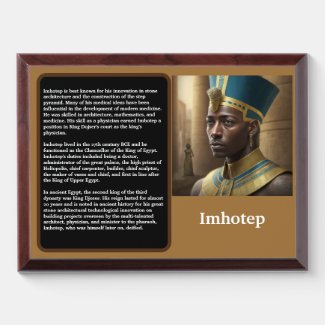
Imhotep the builder


Imhotep, celebrated as one of ancient Egypt’s most remarkable minds, left an indelible legacy that combined architectural brilliance, mathematical mastery, and medical expertise. Known widely as a pioneering pyramid builder, Imhotep’s work laid the foundations of monumental construction practices that would influence generations. His distinctive design of step pyramids revolutionized Egyptian architecture, ensuring his name would be remembered throughout history. Imhotep’s groundbreaking techniques in construction not only pushed the boundaries of architectural possibilities in his time but also set a new standard for structural innovation.

In addition to his architectural accomplishments, Imhotep excelled in the field of medicine, an area in which he held unmatched knowledge. His expertise earned him the prestigious position of physician to the king, a rare and highly respected role in ancient Egyptian society. Serving as the personal doctor to the royal family, Imhotep had a profound impact on the health practices of the era, bringing advancements in medical knowledge and treatment. His contributions to medicine were instrumental in improving the lives of those in his care, further establishing him as an intellectual force with a vast array of skills.

During the reign of King Djoser, the second pharaoh of Egypt’s Third Dynasty, Imhotep’s talents flourished in unprecedented ways. The king, who ruled for nearly 20 years, relied heavily on Imhotep’s guidance to oversee ambitious building projects that would transform Egypt’s architectural landscape. Imhotep’s role as the king’s chief architect, physician, and advisor made him an influential figure in both government and society. His work on the Step Pyramid of Djoser is particularly notable, as it became Egypt’s first large-scale stone structure and an enduring symbol of innovation.

As a multifaceted advisor, Imhotep’s influence extended far beyond the realm of architecture and medicine; he also served as a key minister and trusted counselor to the pharaoh. His architectural achievements under King Djoser’s rule represented a leap in technological advancement, with the use of stone construction methods that would become hallmarks of Egyptian civilization. The iconic Step Pyramid, with its layered terraces reaching skyward, stands as a testament to Imhotep’s visionary mind and his ability to translate complex concepts into lasting monuments.

In recognition of his extraordinary contributions, Imhotep was later deified, becoming one of the few non-royal figures in Egyptian history to achieve divine status. His deification reflects the immense respect he garnered as an architect, healer, and sage whose legacy continued to inspire long after his lifetime. Imhotep’s name endures as a symbol of intellectual greatness, marking him not only as a central figure in ancient Egyptian history but as a timeless icon of ingenuity and wisdom.