Showing posts with label Juneteenth History. Show all posts

Sunday, February 1, 2026

The Freedom Legacy Collection


Histoy, Story and Food

The Freedom Legacy Collection: A Powerful Three-Book Tribute to History, Culture, and Celebration

Discover The Freedom Legacy Collection — a powerful, thought-provoking three-book set that celebrates Black history, cultural pride, and the enduring spirit of liberation. Created by Hank Gray, this meaningful collection brings together history, poetry, and culinary tradition to offer a deeply emotional and educational journey through African heritage and the legacy of freedom. Perfect for families, educators, cultural programs, and meaningful gift-giving, this three-book set honors the past while inspiring the future.

At the heart of this collection is The Juneteenth Dessert Cookbook, a joyful celebration of heritage through irresistible dessert recipes inspired by African American tradition. Juneteenth is more than a holiday, it is a celebration of freedom, resilience, and culture passed down through generations. This cookbook brings that celebration to life through comforting classics and festive treats designed for family gatherings, holidays, and community events. Each recipe tells a story, reflecting how food has always played a central role in preserving culture, honoring the past, and celebrating freedom.

Inside this cookbook, readers will discover dessert recipes inspired by African American culture and tradition, sweet treats perfect for Juneteenth celebrations and family gatherings, and easy-to-follow instructions suitable for home bakers of all skill levels. More than a collection of recipes, this book offers a meaningful way to connect food, history, and remembrance, creating opportunities to bring people together around shared traditions. Whether hosting a Juneteenth gathering or simply adding culturally inspired desserts to your kitchen, this cookbook offers recipes worth sharing.

Complementing the cookbook is A Reminder of Our Freedom, a moving collection of Juneteenth poems that brings history to life through powerful and heartfelt verse. This book honors the people, places, and events that shaped the journey from bondage to liberation. With a variety of poem styles and lengths, it includes accessible poems for children, reflective pieces for students, and deeper poetic storytelling for adults. The poems encourage reflection, education, and emotional connection, making this book an invaluable resource for classrooms, families, and community programs alike.

Completing the collection is Mankind, Made in Africa, a powerful memoir-style narrative written as if Africa itself were speaking to its descendants scattered around the world. From an African American perspective, this deeply imaginative work explores identity, resilience, belonging, and cultural legacy. The book acknowledges the struggles, triumphs, and complexities faced by people of African descent while delivering a message of unity, acceptance, and spiritual homecoming. It reminds readers that if humanity began in Africa, then everyone would be welcomed home, and that Africa’s arms remain forever open.

Together, these three books offer a rich, emotional, and educational experience that nourishes both the mind and the soul. From dessert traditions rooted in celebration, to poetic reflections on freedom, to deep insights into African heritage, each book builds upon the next to create a fuller understanding of Black identity, perseverance, and triumph. This carefully curated set blends history, culture, creativity, and reflection into one unforgettable journey.

Perfect for families, educators, classrooms, cultural programs, and thoughtful gift-giving, The Freedom Legacy Collection is designed to inspire learning, pride, and connection. Whether celebrating Juneteenth, exploring African heritage, teaching cultural history, or seeking meaningful reading and dessert-cooking gifts, this collection offers lasting value, beauty, and purpose. It stands as a powerful tribute to the past, a celebration of the present, and a hopeful vision for the future.

Celebrate Freedom, Flavor, and Tradition — One Dessert at a Time.
Explore The Freedom Legacy Collection and begin a journey of remembrance, reflection, and pride:



Wednesday, July 23, 2025

Juneteenth: A Celebration of Freedom and Family

My original Canva design

Juneteenth: A Celebration of Freedom and Family

When celebrating Juneteenth, it’s important to remember a few key truths that help us better understand the full story of African American history. First and foremost, while all the enslaved people in the United States were Black, not all Black people in the country were enslaved. A number of African Americans lived as free individuals—free from the legal bonds of slavery—even during times when slavery was still practiced in many states. Their presence challenges simplified narratives and invites us to look deeper into the varied experiences of Black life in America.

However, being legally free did not mean living with dignity or rights. Free Black people were still not considered full citizens, and they were largely excluded from political participation. As Frederick Douglass, himself a formerly enslaved man, famously said: “What to the Slave is the Fourth of July?”—a piercing reminder that even national celebrations of liberty rang hollow for many. Free African Americans lived under a legal and social system that marginalized them at every turn.

Not all white people in America were slaveholders. From the very beginning of slavery in the U.S., there were individuals who opposed it—both Black and white. These individuals would form the backbone of the abolitionist movement and, eventually, the Underground Railroad. Harriet Tubman, herself an escaped slave, once said, “I freed a thousand slaves. I could have freed a thousand more if only they knew they were slaves.” Tubman’s courage reminds us of the incredible risks taken to resist oppression, and how liberation was often a collaborative effort between races.

The Underground Railroad was more than a secret network—it was an act of organized moral defiance. Free Black communities and sympathetic white allies created paths to freedom under the threat of fines, imprisonment, and death. These acts of resistance weren’t just about freedom from slavery—they were about the belief in human dignity. As abolitionist William Lloyd Garrison declared, “Enslave the liberty of but one human being and the liberties of the world are put in peril.”

During the days of American slavery, it was sometimes possible—though extremely difficult—for a person to buy their own freedom or that of a family member. These efforts were often funded by years of labor, support from the Black community, or allies. It was a way of reclaiming agency in a system designed to deny it. The path to freedom was never just a legal process—it was a deeply emotional, often spiritual, journey grounded in love for family and hope for a better future.

One of the most devastating and long-lasting effects of slavery was its destruction of the Black family. It was rare for enslaved families to remain intact. Parents, children, and siblings were frequently sold apart. The trauma of these separations echoes through generations. As civil rights leader Fannie Lou Hamer put it, “I am sick and tired of being sick and tired.” That exhaustion came not just from injustice, but from centuries of broken homes and fractured legacies.

There is also a lesser-known truth: some free Black people owned slaves. But context matters. In many instances, these enslaved individuals were family members—spouses, children, or relatives—who had been purchased as a way to protect them and keep them close. These acts were often desperate measures to preserve family bonds in a system where legal ownership was the only means of protection. Even in such painful complexity, the value of family remained central.

That’s why Juneteenth is more than a celebration of emancipation—it is also a celebration of family. It is a moment to reflect on the sacrifices, the resilience, and the fierce love that helped African Americans endure and rise. In remembering the fight for freedom, we must also honor the struggle to keep families together and histories alive. Juneteenth reminds us that freedom is not only about release from chains—it’s also about the restoration of what was lost.


Continue the Journey—Share the Legacy

Juneteenth is not just history—it’s heritage. If this post helped deepen your understanding or stirred something in your heart, don’t let the conversation stop here.

👉 Share this post with your friends, family, or community—because the more we understand our past, the better we can shape our future.
📬 Subscribe to the blog for more reflections on African American history, culture, and resilience.
📚 Explore our Freedom Collection—books, stories, and resources that celebrate Black history from Africa to America and beyond.

Let’s honor our ancestors by staying informed, staying connected, and keeping the spirit of Juneteenth alive—every day of the year.

Monday, April 7, 2025

Is it appropriate for a white person to say "Happy Juneteenth?"


My Juneteenth Art


In today’s climate of heightened sensitivity around race, history, and cultural appropriation, it’s understandable that some might feel hesitant about acknowledging Juneteenth, especially if they are not African American. A simple and cautious answer to whether it is appropriate for a white person to say “Happy Juneteenth” is: I would recommend not. Even with the best intentions, such a gesture can be seen as disrespectful or inappropriate by many within the Black community. The complexities of history and emotion tied to Juneteenth require a level of understanding and empathy that isn’t always assumed in casual greetings.

Juneteenth marks the end of slavery in the United States, commemorating June 19, 1865, when enslaved people in Galveston, Texas, finally received word of their freedom—two and a half years after the Emancipation Proclamation. For many African Americans, this day holds deep emotional and cultural significance, much like Independence Day does for the nation at large. However, the celebration has often been marginalized or suppressed, especially in Southern states where the legacy of slavery and segregation still casts a long shadow.

In the 1960s, during the Civil Rights Movement, Juneteenth saw a resurgence in some areas. Yet, just as quickly, it was often suppressed again—left out of textbooks, downplayed in museums, and largely ignored in school curriculums. This suppression is not a thing of the past. In some regions, those responsible for shaping and sharing American history are once again working to diminish the visibility and importance of Juneteenth. This erasure adds to the sensitivity and protectiveness many African Americans feel around the holiday today.

That said, it's important to acknowledge that not every Black person in America was a slave, and not every white person owned slaves. History is never that simple. There were white abolitionists, Quakers, and countless other individuals—many of whom risked their lives or livelihoods—who fought to end slavery. These people, alongside both free and enslaved Black Americans, contributed to the progress that Juneteenth commemorates. Their efforts and sacrifices are part of the fabric of this history, too.

From this perspective, it becomes clear that Juneteenth isn’t only a “Black holiday” in the exclusive sense. It’s an American holiday. It symbolizes a turning point in our collective history—one that represents freedom, justice, and the slow, painful journey toward equality. White Americans, especially those who understand and respect this history, do have a reason to acknowledge and even celebrate Juneteenth. But how they do so makes all the difference.

Rather than simply saying “Happy Juneteenth,” which can feel tone-deaf or superficial, white individuals might instead approach the day as a moment of reflection, education, and solidarity. Attending Juneteenth events as a respectful guest, reading about the history of emancipation, supporting Black-owned businesses, or simply having conversations about what the day means—these are meaningful ways to participate. These actions show a willingness to honor the spirit of the holiday without centering oneself in it.

Ultimately, while it may not always be received well to casually say “Happy Juneteenth,” that doesn’t mean white people should ignore the day. Instead, they should recognize it for what it truly is: a day that marks progress in the ongoing struggle for freedom and equality in this country. Understanding the history and approaching the holiday with humility and respect can open the door to a more unified and thoughtful commemoration—for everyone.

Thursday, March 20, 2025

Why learn about Juneteenth?


My Canva Art


Why learn about Juneteenth? 


To me, the answer is simple---to combat racism! Despite what the media says today about people not being racist, and racism, not existing---racism is here to stay. That is why celebrations like Juneteenth should be here to stay as well. So here is why I think learning about Juneteenth is essential, every American should know this history for people who want to understand our newest national holiday's significance as more than a historical event. Juneteenth marks the end of slavery in the United States, particularly in Texas, and serves as a powerful celebration of freedom and American history. It represents a pivotal moment when enslaved African Americans in Galveston, Texas, finally learned of their freedom — two and a half years after the Emancipation Proclamation was issued. But beyond that, Juneteenth is a symbol of resilience, unity, and the ongoing fight for equality, making Juneteenth a vital part of the American story.

What many may not realize is that Juneteenth was celebrated not only by the newly freed Black Americans but also by white abolitionists and anti-slavery supporters who worked tirelessly to dismantle the institution of slavery. These white allies believed in the moral wrongs of slavery and stood side by side with Black Americans to bring about change. The celebration of Juneteenth, then, is a tribute to all those — Black and white — who fought for freedom, justice, and human dignity. It reminds us that the abolition of slavery was not the victory of one race over another but a shared triumph for humanity.

A key piece of that story is the Underground Railroad, a network that helped enslaved people escape to freedom. While many free Black individuals risked their lives to guide people along this path, the network was largely supported and run by white Americans who opposed slavery. They provided shelter, food, and safe passage — often at great personal risk. This collaboration across racial lines is a crucial part of Juneteenth’s legacy, showing that the fight for freedom was a collective effort, driven by a belief in the fundamental rights of all human beings.

It’s also essential to remember that not every Black person in America during the time of slavery was enslaved. There were free Black Americans who built communities, owned businesses and contributed to the nation’s growth. They, too, played an essential role in advocating for the abolition of slavery and supporting their enslaved brethren. Juneteenth honors these individuals and their determination to fight for a future where freedom is a reality for all.

Juneteenth is more than a day of celebration — it’s a reminder of what Americans can achieve when they come together for a just cause. It represents the unity of different races in America, all standing against the oppression of the human race. The day calls for reflection on the past, recognition of the progress made, and a renewed commitment to creating a more equitable future. It is an event for all Americans, regardless of background, to gather, learn, and celebrate the spirit of freedom and unity.

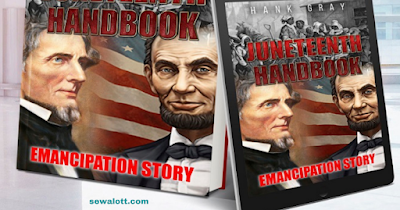
This spirit of togetherness and shared struggle is at the heart of my book, The Juneteenth Handbook. The book delves into the history and significance of Juneteenth, highlighting the efforts of both Black and white Americans who worked to end slavery. It serves as a guide to understanding how the holiday embodies the ideals of freedom, perseverance, and unity — values that continue to shape America today.

In a time when division often dominates headlines, Juneteenth stands as a powerful reminder of what unity can achieve. It encourages us to look beyond our differences and recognize the humanity that binds us all. The legacy of Juneteenth teaches that freedom is not a gift handed down by one group to another — it’s a right that belongs to everyone, and it’s a victory earned through the collective efforts of diverse, determined individuals.

By learning about Juneteenth, we honor those who endured unimaginable hardships and those who fought alongside them to break the chains of slavery. We acknowledge the progress that has been made and the work that remains. Juneteenth is a celebration of freedom, a testament to unity, and a reminder that America’s strength lies in its diversity and its people’s unwavering pursuit of justice.


Thursday, November 7, 2024

Juneteenth Poetry Book


My original Canva Poem art


Hank Gray’s new release, A Reminder of Our Freedom, is a poignant exploration of Juneteenth through a carefully curated collection of poetry and historical insights. Available in both paperback and e-book formats, this 6x9 inch book with 121 pages is more than a literary piece—it’s an educational journey. Gray’s expressive verses and thoughtful prose provide readers with a unique perspective on the oldest African American celebration in the United States, now recognized as the nation’s newest federal holiday. By combining poetry with historical snippets, Gray connects past events to present-day celebrations, highlighting the legacy of resilience and unity that Juneteenth represents. 

 Known as the creator of The Juneteenth Handbook, Gray brings a wealth of knowledge and sensitivity to the subject. His background in chronicling the history and cultural significance of Juneteenth shines through in A Reminder of Our Freedom. This book captures the rich and complex history behind the holiday, going beyond the surface of celebration to honor the lives and sacrifices of African American ancestors. Each poem and historical piece serves as a tribute to those who endured and resisted the horrors of slavery, while also celebrating the joy of freedom that Juneteenth embodies. Readers can find more about Gray and his work on his Amazon author page at https://author.amazon.com/home.

In A Reminder of Our Freedom, Gray skillfully balances poetry with historical context, illustrating both the emotional and factual significance of Juneteenth. His poems express themes of personal freedom, community strength, and the enduring legacy of those who sought liberation for themselves and their descendants. Alongside the poetry, Gray includes background on notable figures, events, and places that contributed to making Juneteenth a recognized celebration. These historical elements give readers a fuller picture of the holiday’s origins, showcasing the courage of individuals who paved the way for freedom.

Juneteenth is not only a day to remember the end of slavery but also a day to honor those who fought for it—many of whom never lived to experience the freedom they pursued. Through this collection, Gray emphasizes the sacrifices of countless African American ancestors who endured great suffering, all while fostering hope for a liberated future. A Reminder of Our Freedom serves as both a literary tribute and a call to remember their legacy. By combining personal reflection with historical tribute, Gray gives readers an opportunity to understand Juneteenth on a deeper level, making the book a meaningful addition to any collection on African American history.

Gray’s work provides an accessible entry point for readers of all backgrounds to learn about and appreciate Juneteenth. A Reminder of Our Freedom is a timely reminder that, although the holiday commemorates the end of slavery, the journey toward equality and justice continues. With its mix of poetry, history, and reflection, the book captures the essence of what Juneteenth stands for: freedom, resilience, and unity. Gray’s dedication to preserving and sharing this cultural legacy is evident, making A Reminder of Our Freedom not just a book, but a heartfelt homage to an important chapter in American history.

Monday, April 8, 2024

Juneteenth Coloring Book


MyColoringBookArt


This post is about my new Juneteenth Coloring book just released (or as my grandson would say, just DROPPED) on Amazon. The coloring book is for kids and intended to shine a little more light on the meaning behind the Juneteenth celebration, for kids through images, from the time of the African ancestors who themselves, were unable to enjoy what we take for granted today. Back in 1865 unity, a sense of resilience, and freedom, were all things the institution of slavery fought hard to keep away from the American African people. With, "Freedom" for themselves and their families being the number-one desire for  Americans from Africa back then. A freedom the slave ancestors both preyed for and fought for. Several hundred years of African ancestors would not live long enough to see what happened on June 19th, 1865 so today on Juneteenth we celebrate that freedom for them.

This coloring book was created to provide one more significant interest, and understanding of the newest federal holiday in this nation, and also just happens to be the oldest African American celebration, in this nation. Juneteenth as a national holiday, may only be a few years old, but the Juneteenth celebration has been going on in the United States since June 19th, 1865. I wanted to get this coloring book out before this coming Juneteenth celebration so that as families gather at the parks and squares around the nation, children flip through the pages of this coloring book, adding their own colorful interpretation to the historical characters and moments depicted inside. They take away a better understanding of this holiday so long denied federal recognition.  


With each stroke of the marker, or crayon participants not only understand and celebrate the progress made on that fateful day, in Galveston Texas, in 1865, but they gain an even clearer picture of the battle still going on today due to the lack of justice and equality that stems from back in 1865, when the institution of slavery changed into the institution of racism. During the time that slavery existed in this nation, the majority of Americans from Africa were not allowed to keep their families together. That is why I say that Juneteenth is all about family because now the African American family is strong, and if it's not, it still could be. So as laughter fills the air of the Juneteenth celebration you attend or host, think of every family gathering as an opportunity for the older of us to bridge the gap between generations and reinforce the timeless importance of the African ancestors and Juneteenth.

The Juneteenth coloring book serves not only as a source of entertainment, and activity for the kids but also as a symbol of hope and solidarity and a reminder to us all that the journey toward equality and freedom is one we must all continue to pursue, Juneteenth after Juneteenth, together.

These are some of my other books

Monday, June 26, 2023

John Brown and Juneteenth

My original Canva art
It is my belief that had he lived, John Brown would have been happy to participate in the first Juneteenth Celebration and support the cause he dedicated most of his later years in life. His fight against slavery was a cause that would eventually have him labeled a domestic terrorist by the slaveholders and slave merchants. A cause that would in the end take his life, along with the lives of more than one of his sons. 

John Brown's ancestors include Peter Brown, a passenger on the Mayflower, and Captain John Brown, before him, who fought in the Revolutionary War. John Brown would follow in the footsteps of his father, Owen Brown an abolitionist, civil servant, and trustee at Oberlin College. John, himself would become a fervent anti-slavery supporter. However, while his father Owen would choose the non-violent means to support the anti-slavery cause his son John would choose the more confrontative route. One that would strike terror into the hearts of those who believed in, and supported slavery.


John Brown was viewed by the slaveholders and slave merchants as the man (a white man) who not only wanted to arm the slaves against their masters, but who also planned to fight alongside them in a battle against the institution of slavery. Few things evoked fear in a southern household more than the idea of armed slaves coming for them.

"I have only a short time to live, one death to die, and I will die fighting for this anti-slavery cause."     

John Brown


John Brown's plan to raid the armory at Harper's Ferry to arm the slaves and activate his plan was put down by U.S. Marines led by Colonel Robert E. Lee, and his lieutenant J.E.B. Stuart. Men who would later become key parts of the Confederate army, who at the time of John Brown's raid were still serving in the union arm. John Brown himself was called crazy at the time for his confrontative stance against the institution of slavery that had stood for hundreds of years. Several of his sons, as well as black and white supporters would fight and die alongside John Brown in his battle against the institution of slavery.


His own home was a station on the Underground Railroad. That is why I believe that even though he didn't live long enough to witness the June 19th, 1865, and the celebration that would signal the end of slavery. Nor would John Brown experience the extra added amendments to the United States Constitution (the 13th, 14th, and 15th Amendments) that brought an end to slavery all over this nation I get the feeling that the Juneteenth Day Celebration would surely have been worth remembering and celebrating to John Brown.
  
"I pity the poor in bondage that have none to help them. That is why I am here, not to gratify any animosity, revenge, or vindictive spirit. It is my sympathy with the oppressed and the wronged, that are as good as you, and as precious in the sight of God. You may dispose of me easily, but this question is still to be settled. The Negro question, the end is not yet."


Friday, June 16, 2023

Why Black and White People Celebrate Juneteenth

My Canva Design


Why should Black and White people celebrate the Juneteenth Day Celebration?  First of all the Juneteenth Celebration is a national holiday, intended to be celebrated by the entire nation. From the information I have been able to gather the majority of American African people who celebrate Juneteenth Day Celebration do so to honor their African ancestors who fought for and eventually gained their freedom from slavery in the United States. On that day (June 19th, 1865) the ball started rolling toward the official end of slavery in this nation that the Juneteenth Day Celebration is based. Even though the first official celebration of Juneteenth happened one year later, on June 19th, 1866. Since then, and long before Juneteenth became a national holiday American African descendants have celebrated Juneteenth as the end of slavery in this nation, and to honor the African ancestors who fought for, and did not live long enough to experience the freedom American Africans enjoy today.

What reason do non-American African people have to celebrate the Juneteenth Celebration?

There were many white, and other nationalities that were against slavery during the days of slavery and many of them were willing to put their own freedom, their property, and in some cases, their lives on the line in the fight against slavery. And, while many runaway slaves chose to self-emancipate themselves, thousands of other runaway slaves were helped by the clandestine system of escape known as the Underground Railroad. Set up and maintained, in many places, by white people. While June 19th, 1865, was the day that started this nation down the road to freedom for all, the addition of the 13th, 14th, and 15th Amendments to the United States Constitution, added to the news presented in the reading of General Order No.3 a year earlier, abolishing slavery throughout the entire nation.

Black and White Abolitionists knew they were involved in illegal activity and as a result neither had any misunderstanding about what would happen to them if they were caught helping a runaway slave. As far as the slaveholders and slave merchants were concerned the punishment issued by the slave chaser was usually equal for any white person, or black person caught with someone else's property. So, the news shared in Galveston back in 1865 was enough to give rise to many white abolitionists rejoicing as well. Not only because there was a victory in their fight against slavery, but also, because no longer did white abolitionist need to risk life and limb to participate in the fight against the slaveholders.

Needless to say, that because of the covert operation of the Underground Railroad during the days of slavery, when not all black people were good, and not all white people were bad, few who participated in the Underground Railroad when out of their way to document their exploits. But there was one who did take that chance, the black abolitionist Mr. William Still. Due to a per-chance meeting with a runaway slave on the street that turned out to be his own brother, William Still decided to chronicle the experience of every runaway slave he helped, with the hope of giving each a written repository whereby they might find the necessary information to reunite them with long lost family members, separated by slavery. His hidden written records would become the book titled: The Underground Railroad.

Sunday, April 16, 2023

What is Juneteenth and why is it in the news?

My Canva/Zazzle Design

 What is Juneteenth and why is it in the news?

Juneteenth is the celebration that celebrates the end of slavery in the United States, even though June 19th, 1865, was the unofficial beginning of the Juneteenth Celebration,  not all of the slaves in the U.S. were freed by Abraham Lincoln's Emancipation Proclamation, but it was a start. June 19th, 1865 was the day federal troops arrived in Galveston Texas taking control of the last Confederate stronghold in the southern state of Texas. The newly freed slaves were still not considered citizens of this nation, nor did the newly freed slaves have the right to vote. Constitutional recognition of their freedom would come with the passage of the 13th, 14th, and 15th Amendments to the United States Constitution, and the first official recognition of the Juneteenth Celebration would follow on June 19th of the year 1866.


Thursday, November 10, 2022

Fighting For This Nation

African American Fighter Pilot


Ever since this nation was a collection of colonies black people have been involved in the fight for this nation's independence and freedom. However, the preservation of history with regard to this subject has not always been kind to black people's contribution. Every major conflict from 1776 to modern-day global conflicts African American people have participated in and distinguished themselves. The American African history in this country did not begin with slavery. In fact, if the history surrounding this topic were accurate, it would be prominently noted that not every black person in America during the days of slavery was a slave. When Frederick Douglass proposed to Abraham Lincoln that black people should be allowed to fight for the union in the war between the states. Many southerners in congress only saw the "slaves" as being "armed" which to them was, not good ju-ju. 

Of course, our ancestors, many of which were born in Africa, did participate in the Civil War, and much like in the colonial war, that ended in 1776, the African American contributions stood out. The same would be true for WWI, WWII, and all the other major armed conflicts this nation participated in. In fact, if history had been accurately taught in schools back then, it would have been known that African people can commit to war and be just at victorious as anyone else on this planet. Simply sharing the knowledge about the African Queens, and Kings, who took on the Roman Empire and won not only battles but Roman's respect, might have been enough. 

Just as I point out that not all black people during the days of slavery were slaves, I also point out that not all of the slaves forced to come to America were dumb, or unskilled. They may not have understood the customs or the language, but many of the slaves, especially those who were Muslim actually had more educational knowledge than those who enslaved them. I'm talking about slaves who had built bridges, temples, and entire kingdoms before ending up a slave. A lot of the Muslim slaves went to South America and were highly regarded for their cleverness. 

These slaves would eventually overthrow their enslavers and claim the nation of Haiti for their own. Many of those in congress, at the time, who did not want to see the slaves armed to fight for the union knew about the above history, the history that showed what armed black people with a purpose could do, and it gave them nightmares. But by then black people were no longer fighting to get back to Africa. America is the only home the ancestors of the slaves (us) have ever known. 

Still, every American African should know the history of their roots the African Kings and Queens who ruled over Egypt, and how Africa was the first true world power. That knowledge can show you what makes American Africans some of the most fierce fighters in uniform. American Africans will always protect home.

Friday, October 28, 2022

What did the ex-slaves and slaves eat in 1865

What did the slaves eat?


Slaves in West Africa before contact with Europeans lived mainly on a diet that was low in meat protein except for those who lived near the water where fish were plentiful. Their diet consisted mainly of maize,(corn) rice, peanuts, dried beans, and yams. After contact with Europeans and arriving in the U.S. the slave diet became a little richer based partly on the fact that a well-fed slave meant good productivity in the fields. So around the year 1865, near the end of slavery in this country, most slaves could depend on food rations that included some kind of meat or meat scraps, corn meal, lard, molasses, flour, greens, and peas. Those food items could sometimes be supplemented with fruit and nuts where available. 

As mentioned in the title (ex-slaves and slaves) in 1865 not all of the slaves in the United States were freed on June 19th, 1865 so for those that remained enslaved the above rations list was still in place. For the newly freed slaves, freedom from slavery meant the cutting off of their usual rations with the majority of fresh meat in their area being consumed by union troops taking over the southern stronghold in Galveston Texas, and throughout the south. So, I can be really sure just what the ex-slave feeding habits were immediately after slavery ended in the south. The Freedmen's Bureau would later be set up to address this issue. A year later though, around the time of the first official celebration of Juneteenth in June 1866, things were settled enough that at the first official celebration of the end of slavery in this country at the 1966 Juneteenth Celebration there were many of the food items we have today are on the menu. 

Peppered rabbit, okra soup, chicken, and Hominy (another form of corn usually made into grits) were a part of the first official celebration of Juneteenth. As the celebration spread outside of texas BBQed and grilled meats, greens, potato salad, cornbread, and a lot more familiar southern soul food dishes could be found at the Juneteenth Celebration. Something that has always been associated with the end of slavery celebration is the drinking of something red. Believed to be a West African tradition that survived in African people transported across the Atlantic Ocean to the U.S., the color red was associated with prosperity in West Africa. In the U.S. the color red also symbolized the blood spilled by the African people to be free. Long before the underground railroad slaves had been self-emancipating. Sometimes peacefully sometimes not. 

There was bloodshed in slave revolts and slave uprisings to go along with the bloodshed from the thousands of black lives who fought for this nation in the war for independence, in 1776, which did not make the slaves free. The Civil War, in 1865, did result in American Africans being set free. That is what makes the color red important to the Juneteenth Celebration. While today's descendants of the slaves, like me, may enjoy many of the same foods our enslaved ancestors did the food is still just a small part of the Juneteenth Celebration.

The main celebration of Juneteenth is all about freedom. A freedom our ancestors could only dream about. Juneteenth is also a celebration of family and a family celebration. The ancestors, slave families, could not depend on family gatherings and get-togethers because back in 1865 many slave families were separated by slavery, and sold apart from each other. Freedom from slavery meant that families could no longer be separated from each other by slavery, and that, while families might not live in the same house they could still come together for events like Juneteenth, the independence day that outshined the July 4th Celebration by making All Americans, including American Africans, free.

Add some good-tasting soul food with something red to drink, some African drum music, sports events, and a parade and you have a family holiday celebration that outshines all the others for American African people.

Monday, September 19, 2022

Is Juneteenth a black thing?

Juneteenth Art

 It goes without saying that black people are very happy for the freedom of our ancestors and by extension the freedom from slavery American Africans enjoy today. For hundreds of years, Africans turned African Americans labored to help build this nation receiving little more than room and board in return. They labored so long that when word first began to circulate among the slave population there was little hope their day of freedom would actually come.

But on June 19th, 1865 the words written in Abraham Lincoln's Emancipation Proclamation would reach the slaves in the deep south, and not long after that, the 13th Amendment would put an end to slavery everywhere in the United States. By the time the first official Juneteenth Celebration happened on June 19th, 1866 freedom from slavery in the U.S. was finally a reality no one slave, slave owner, or slave merchant could deny.

In my opinion, Juneteenth is not just a "black thing" or not just a black celebration. Juneteenth is an American Celebration and a valuable part of American History. June 19th, 1865 was another independence day celebration, one that, unlike July 4th, 1776 included everyone in this nation. And as I always point out Juneteenth is and was a celebration for all of the white, Indian, and other nationality abolitionists who worked alongside black abolitionists to keep the wheels of the underground railroad turning in the direction of freedom.

Keep in mind that the abolitionist was also in a fight for freedom too. Assisting runaway slaves was against the law. To a big part of America, the abolitionist was considered no more than a well-organized band of thieves intent on relieving slave merchants and slave owners of their paid-for and inherited property. To participate in helping runaway slaves reach freedom abolitionists risked losing their freedom, their property, and in several cases their lives.

To the abolitionists, Juneteenth and the eventual passing of the 13th Amendment meant that white clergy, farmers, and businessmen no longer had to risk all of the above. In no way do the abolitionist's struggles equal the struggle of a people forced into slavery but for those who chose to do more than simply protest or write letters to politicians and hope. Those who chose to be abolitionists chose to put some of their own skin in the game when it came to the task of making sure that all who lived in, and who helped build this nation, could be free and protected by this nation's laws.

John Brown and his sons, who gave their lives for the anti-slavery cause, I believe, would most certainly celebrate Juneteenth, the end of slavery. His plan was to arm slaves and fight with them against the slave owners, merchants, and the powers-that-be failed, but his efforts did show a nation that not only were some white people willing to arm black people but also fight with them to end slavery.

If you choose to ignore all of the contributions and sacrifices made by all the non-African Americans like John Brown and others that led to the Civil War, Lincoln's Emancipation Proclamation, Juneteenth, and the 13th Amendment you discount some valuable U.S. History. I say the Juneteenth Celebration could be an all-black thing if it weren't for all the other different skin colors involved in its creation.


Art Prints

Tuesday, March 1, 2022

The Juneteenth Fact Sheet


I made a Juneteenth Fact Sheet for the Juneteenth beginner so that at a glance you can instantly be brought up to date about the oldest American African celebration in this nation. This is also the oldest celebration of the end of slavery in this land for the antislavery faction, the black and white abolitionists who took up the cause and saw it through to the end, June 19th, 1865. And, as I point out in my Juneteenth Handbook just like the Israelites established the Passover to celebrate their deliverance from bondage our newly freed slave ancestors did the same and called their day of deliverance, Juneteenth.

I say that Juneteenth is also about family because for hundreds of years Africans, born in Africa, and the descendants of Africans, born in the Americas, had little to no control over their family unit. It was a rare occasion when one family could live and stay together under one roof and not have to live in fear of having a family member sold off for profit or punishment. Juneteenth meant more than just the end of slavery. It also meant the beginning of American African families, husbands and wives, sons and daughters, being able to stay together.

To me, that single fact about family is also worth an Independence Day celebration to be celebrated with the entire family. That would be the ideal, anyway, the reality is that today families who have way more control over when and where to see each other are just as spread out as they once were and the invention of all of our modern gadgets cellphones, computers, laptops, tablets can provide their own challenges even when a family can gather.

My grandkids who constantly amaze me with their knowledge of video games, and computers, have never seen a phonebooth, don't know how to dial a rotary telephone, and call the 45rpm records I used to make when I lived my life as a musician, big CDs. When it comes to the Juneteenth Celebration's connection to the family, I think about all of the things we take for granted nowadays, when it comes to celebrating Juneteenth and try to remember the ancestor's family pulled apart from them until a day of celebration became just another reminder of the husband, wife, son, or daughter who was no longer there.

I was celebrating Juneteenth long before it became a federal holiday and because my family was a lot younger and smaller back then my first Juneteenth experience was a family experience. My learning about the Juneteenth Celebration went into hyper-drive after that and along the way, the family aspect of this celebration stuck out to me. Not only did June 19th, but signal the downfall of slavery in this country it also signaled a new beginning for the American African family. That is why my new Juneteenth Fact Sheet contains the image of a family.

The Juneteenth Fact Sheet is available on my Juneteenth Handbook website and my Juneteenth Pinterest location as well as my Juneteenth Day 1, Blog. Keep in mind for this coming 2022 Juneteenth Celebration will represent a history-making event in much the same way June 19th, 1866 did when it became the first official Juneteenth Celebration on the first one-year anniversary of June 19th, 1865. June 19th, 2022 will be the first one-year anniversary of the Juneteenth Celebration becoming a federal holiday.


Friday, January 7, 2022

The Juneteenth Handbook

Emancipation Story

The Juneteenth Handbook was put together by me to share my very own personal experience about attending my first Juneteenth celebration, and to share some interesting information about the Juneteenth celebration collected during my research stage for this book's companion video/DVD A Time to be Remembered, A Juneteenth Story.  My handbook also offers a brief history of the Juneteenth celebration that includes many of the people, places, and things associated with the oldest celebration of the end of slavery in this nation. Much of this history I did not know before starting my Juneteenth knowledge-gathering journey.

My other motivation behind this handbook was the joy of knowing that some of these interesting Juneteenth snippets, cut from my video production because of time considerations, would not be lost to the editing room floor. The fact that Juneteenth is currently a federal holiday is amazing to me and was one of the driving forces for me creating the video, and the handbook, thinking that if enough Americans became aware of the truly historic significance of the Juneteenth celebration it might help tip the scale all the way over to; make Juneteenth a national holiday.

In my retired life, I realize that I not only love history, but I also love uncovering hidden history. So far, it's been history hidden from me, I'm sure if my college days had bent more toward African American history rather than electronics, the history I am learning about today would have shown itself to me much earlier. Still, many of the things I have learned about slavery and the Juneteenth celebration these days I wish I had known when I was in school.

The truth of the matter is that the Juneteenth celebration, which culminated with the passage of the 13th, 14th, and 15th Amendments did something the July 4th, 1776 celebration did not do. The Juneteenth celebration made the United States a more perfect union because, on June 19th, 1865, all Americans, black and white, were finally entitled to equal protection under the laws of this nation, something that was not true on July 4th, 1776.

The thing to remember is that Jubilee Day, Freedom Day, Emancipation Day, just some of the other names for the Juneteenth Celebration, is an important part of American History and is considered the longest-running African American, and end of slavery celebration in the U.S. North Dakoda, and Hawaii used to be part of the last three states in the union with no prevision to celebrate Juneteenth. Each of those states has since approved legislation to honor Juneteenth as a State Holiday leaving South Dakoda the only no Juneteenth celebration holdout.

Tuesday, August 24, 2021

Juneteenth Freedom Day


Emancipation Day, Freedom Day, Black Independence Day, Jubilee Day, Officially Juneteenth National Independence Day are some of the other names for Juneteenth. On June 19th, 1865 the United States moved a step closer, as a nation, to honor the words written in the U.S. Constitution about all men being created equal. To Fredrick Douglass and his abolitionist colleagues, Abraham Lincoln's Emancipation Proclamation wasn't passing the truth test. When the truth about the Emancipation Proclamation was known it became clear the document completely overlooked all of the slaves in friendly northern states so: what to the northern slaves was the Emancipation Proclamation on June 19th, 1865? 

Not much, and especially not a document of freedom for the slaves in friendly union states. By the end of that year (1865) that oversight would be remedied with the passage of the 13th Amendment, and the following year, 1866, on the one-year anniversary of General Gordon Granger's reading of General Order No. 3 the first official Juneteenth Celebration was held. This time ex-slaves, north and south, could participate in the freedom celebration because it was the 13th amendment that abolished slavery everywhere throughout the United States. 

The following year in June congress would pass the 14th amendment, which was ratified in July 1868. The 14th amendment made the ex-slaves citizens of this nation they had sacrificed their African identities for and toiled as slaves for more than 400 years. In my opinion, the most important part of the 14th amendment is the equal protection under the law the 14th amendment gave to the ex-slaves and their descendants.

The 14th amendment did much to help form the more perfect union referred to in the constitution and the reason I believe Juneteenth is the true National Independence Day. When asked to speak at a 4th of July celebration Frederick Douglass asked in his speech: what to the slave is the 4th of July? Because not only were the enslaved Americans not free at that 4th of July celebration, celebrating freedom from British rule, those same slaves were not considered citizens of the nation so many had fought and died for in the colonial war.

The 13th amendment made it possible for blacks and whites to celebrate a national independence day. Freedom from British Rule and Freedom from slavery, reduced down to its lowest denominator, freedom. The name chose for that new National Independence Day was Juneteenth. That is how all of the above appears to me anyway.

Slavery needs to be talked about in our schools, up to and including the end of slavery because the slave trade was a big part of American History, in much the same way slavery was part of Roman and British history as well as dozens of other world powers. New and better school textbooks are needed, more detailed than the textbooks I had in school along with teachers willing to teach history the way American history really was. Juneteenth and its rise to a national holiday should also be included along with the people and politics to make it happen because while Juneteenth is now a federally recognized National Holiday it is still illegal to teach about Juneteenth in more than a dozen states.

Saturday, June 19, 2021

Juneteenth 2021 The First

Ladies Juneteenth Picnic


The Juneteenth 2021 Celebration will be a little different from all of the other Juneteenth celebrations that have happened before now because the year 2021 celebration will be the first time Juneteenth is celebrated as a national holiday. Just like the years of hard work, dedication, and prayers that led to ending slavery in the United States, the years of hard work, dedication, and prayers to make Juneteenth a national holiday have finally become a realization. 


Flag Girl


Only, unlike the news about the Emancipation Proclamation, that was withheld from the slaves in the southern U.S. for two years, notification of Juneteenth reaching national holiday status was instant, given today's technology, catching many people, myself included, off guard. Talk about making Juneteenth a federal holiday had been going on ever since I first became aware that the juneteenth celebration existed.

To be perfectly honest I had started to believe that because of today's highly polarized political climate debate in Washington DC about making Juneteenth a national holiday would once more be batted around and once more tabled, tossed aside, forgotten. News of President Joe Biden finally signing the Juneteenth Celebration into the history books came as a total surprise.


And the name Juneteenth National Independence Day has a nice ring to it since on July 4, 1776 the majority of black people living in the colonies were still slaves and not considered citizens of the same nation they fought for in the colonial war, and in the Civil War. June 19th, 1865 was the date that freedom for African American people in the United States began followed by the 13th Amendment that abolished slavery everywhere in the U.S., and the 14th Amendment granting citizenship rights and equal protection under the law to the ex-slaves.

I would love to have been able to learn the above historical facts when I was in grammar and Jr. high school. When I was in grade-school I had no ideas about a Juneteenth celebration. My parents (from Louisiana and Texas) seemed more interested in forgetting about their life experinces growing up in the Jim Crow south than sharing them.

For the sake of the African Ancestors, the history of slavery in this nation should not be forgotten. It (slavery) did after all happen, and African American people in this country have suffered from the end of slavery aftereffects since June, 19th 1865, and the so-called re-construction period. For the naysayers who might think that learning about slavery might evoke too many unflattering images of the way some white people used to treat black people, I say this would be an excellent opportunity to learn about all of the white people that did not support slavery and the contributions they made that would eventually bring slavery to an end in the U.S. 

Juneteenth is truly a National Independence Day because what started on that day and ended with the passage of the 13th Amendment did make that a day of freedom for the entire nation and the words in the constitution finally true for everyone, that all men were created equal and treated equally under the law.