Saturday, November 30, 2024

Know thy self, the Ancient Egyptians

My original design

We are the descendants of ancient Egypt, separated from our motherland through the cruel realities of slavery and dispersed across the Americas, the Sahara, and the world. Yet, our connection to our roots remains vital. The voices of our ancient African ancestors carry messages that transcend time, urging us to recognize and honor their legacy. These messages remind us that no matter what history others have written for us, it is our duty to listen, understand, and pass down their stories. Through this understanding, we ensure that future generations know the true accomplishments of their forebears.

The words of the ancient Egyptian ancestors, "Know Thyself," hold profound meaning. To truly know oneself is to understand that the history often presented to us paints a limited and distorted picture of our achievements. While mainstream narratives downplay the contributions of ancient Africans, the truth is that our ancestors built civilizations that predated many others, including European societies. They were innovators and creators, shaping a world power that thrived through trade and exploration long before today’s global powers came into existence. This legacy includes African explorers who navigated the seas, discovering new lands, including the Americas, centuries before Christopher Columbus’s misdirected voyage.

Much of the history written about Africans and African Americans has been shaped by prejudice and ignorance. There was a time when it was widely believed that black people could not excel in sports like baseball or basketball, serve as fighter pilots in the military, or rise to positions of great leadership, including the presidency—until history proved these assumptions wrong. The same bias clouds the narratives about ancient Egypt, where many still resist the idea that black Africans built great civilizations, ruled as pharaohs, and led powerful armies. Despite the evidence, such resistance persists, reflecting a broader unwillingness to accept the truth of black excellence throughout history. In my opinion, it all leads to one burning truth from the ancient ancestors to, Know-Thy-Self!

This resistance is not without its consequences. Today, those who seek to present an honest account of black history are often accused of "black-washing" history, a term weaponized to discredit their efforts. For instance, comedian Kevin Hart faced backlash when his show in Egypt was canceled after it became known that he intended to speak positively about black people's true contribution to ancient Egypt and the world. This incident illustrates the enduring struggle to assert a truthful narrative against deeply ingrained biases. Despite these challenges, the message from our ancestors remains clear: to "Know Thyself" is to confront these distortions and reclaim our history.

Ultimately, understanding our history is not just an act of remembrance but a form of empowerment. When we embrace the truth about our past, we dismantle the myths designed to diminish us. By honoring the legacy of our ancient ancestors and their accomplishments, we inspire future generations to take pride in who they are and where they come from. Through this connection to our roots, we preserve a legacy of resilience, ingenuity, and greatness that no distortion can erase.

Join me!

Friday, November 22, 2024

Mankind, Made in Africa

Africa, African Ancestors,


 Africa Teaching, Teaching Africa, my new book Mankind, Made in Africa is a deep and heartfelt exploration of identity, heritage, and resilience. It is crafted through a collection of stories, ideas, and poems that reflect on what it means to be connected to the African continent. Written from an African American perspective, the book imagines Africa reaching out to her global descendants, spreading a message of peace and love to all those linked by heritage—whether they have dark skin or not. This narrative emphasizes cultural unity, highlighting the idea that Africa's legacy knows no borders or color lines, transcending all divisions.

At the heart of the book lies a profound respect for Africa as the motherland, a place of origin that connects people across oceans and continents. The narrative acknowledges the pain of the TransAtlantic Slave Trade, during which millions were forcibly taken from their homeland. Yet, despite this brutal history, the stories in this collection highlight the resilience of these displaced children of Africa. They carry within them the spirit of their ancestors, a spirit that could not be broken even by the harshest of circumstances.

The book is a tribute to those who survived the Middle Passage, who endured the journey across the Atlantic and faced the hardships of life far from home. It recognizes that, though separated by distance and time, the essence of Africa remained alive in them. Their strength and adaptability, as well as their ability to hold on to cultural roots, are celebrated within the pages of Mankind, Made in Africa. The book offers an affirmation of the unbroken spirit that persists among the descendants of Africa's stolen children.

Through these stories and poems, Mankind, Made in Africa amplifies the voices of the African diaspora, providing a platform for experiences and perspectives often overlooked. It envisions a world where Africa, as the cradle of humanity, extends a message of healing and unity to all her descendants. This outreach is seen as a call for connection, reconciliation, and understanding—a recognition that the bonds of heritage are enduring and profound, regardless of geographical separation.

This collection is not just a reflection on the past, but also a celebration of the present and a hopeful gaze toward the future. It encourages readers to delve into the shared history that connects people of African descent, to understand the deep roots that bind them. It is a reminder that Africa's influence stretches far beyond its geographical boundaries and that her children, wherever they may be, are part of a larger story of resilience and survival.

Mankind, Made in Africa ultimately serves as both a tribute and a call to action. It invites readers to engage with Africa’s history and to embrace the diverse identities that have blossomed from it. The book seeks to foster a renewed connection to the African continent, urging a deeper exploration of heritage, identity, and the shared human experience that unites us all. Through its pages, it hopes to inspire a sense of belonging and pride, reconnecting people with the essence of Africa—their spiritual and cultural home.

Saturday, November 9, 2024

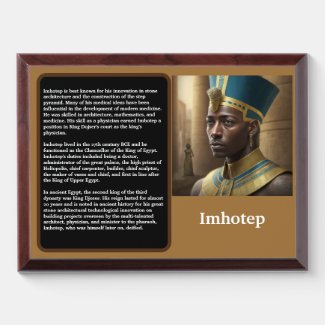
Imhotep the builder


Imhotep, celebrated as one of ancient Egypt’s most remarkable minds, left an indelible legacy that combined architectural brilliance, mathematical mastery, and medical expertise. Known widely as a pioneering pyramid builder, Imhotep’s work laid the foundations of monumental construction practices that would influence generations. His distinctive design of step pyramids revolutionized Egyptian architecture, ensuring his name would be remembered throughout history. Imhotep’s groundbreaking techniques in construction not only pushed the boundaries of architectural possibilities in his time but also set a new standard for structural innovation.

In addition to his architectural accomplishments, Imhotep excelled in the field of medicine, an area in which he held unmatched knowledge. His expertise earned him the prestigious position of physician to the king, a rare and highly respected role in ancient Egyptian society. Serving as the personal doctor to the royal family, Imhotep had a profound impact on the health practices of the era, bringing advancements in medical knowledge and treatment. His contributions to medicine were instrumental in improving the lives of those in his care, further establishing him as an intellectual force with a vast array of skills.

During the reign of King Djoser, the second pharaoh of Egypt’s Third Dynasty, Imhotep’s talents flourished in unprecedented ways. The king, who ruled for nearly 20 years, relied heavily on Imhotep’s guidance to oversee ambitious building projects that would transform Egypt’s architectural landscape. Imhotep’s role as the king’s chief architect, physician, and advisor made him an influential figure in both government and society. His work on the Step Pyramid of Djoser is particularly notable, as it became Egypt’s first large-scale stone structure and an enduring symbol of innovation.

As a multifaceted advisor, Imhotep’s influence extended far beyond the realm of architecture and medicine; he also served as a key minister and trusted counselor to the pharaoh. His architectural achievements under King Djoser’s rule represented a leap in technological advancement, with the use of stone construction methods that would become hallmarks of Egyptian civilization. The iconic Step Pyramid, with its layered terraces reaching skyward, stands as a testament to Imhotep’s visionary mind and his ability to translate complex concepts into lasting monuments.

In recognition of his extraordinary contributions, Imhotep was later deified, becoming one of the few non-royal figures in Egyptian history to achieve divine status. His deification reflects the immense respect he garnered as an architect, healer, and sage whose legacy continued to inspire long after his lifetime. Imhotep’s name endures as a symbol of intellectual greatness, marking him not only as a central figure in ancient Egyptian history but as a timeless icon of ingenuity and wisdom.


Thursday, November 7, 2024

Juneteenth Poetry Book


My original Canva Poem art


Hank Gray’s new release, A Reminder of Our Freedom, is a poignant exploration of Juneteenth through a carefully curated collection of poetry and historical insights. Available in both paperback and e-book formats, this 6x9 inch book with 121 pages is more than a literary piece—it’s an educational journey. Gray’s expressive verses and thoughtful prose provide readers with a unique perspective on the oldest African American celebration in the United States, now recognized as the nation’s newest federal holiday. By combining poetry with historical snippets, Gray connects past events to present-day celebrations, highlighting the legacy of resilience and unity that Juneteenth represents. 

 Known as the creator of The Juneteenth Handbook, Gray brings a wealth of knowledge and sensitivity to the subject. His background in chronicling the history and cultural significance of Juneteenth shines through in A Reminder of Our Freedom. This book captures the rich and complex history behind the holiday, going beyond the surface of celebration to honor the lives and sacrifices of African American ancestors. Each poem and historical piece serves as a tribute to those who endured and resisted the horrors of slavery, while also celebrating the joy of freedom that Juneteenth embodies. Readers can find more about Gray and his work on his Amazon author page at https://author.amazon.com/home.

In A Reminder of Our Freedom, Gray skillfully balances poetry with historical context, illustrating both the emotional and factual significance of Juneteenth. His poems express themes of personal freedom, community strength, and the enduring legacy of those who sought liberation for themselves and their descendants. Alongside the poetry, Gray includes background on notable figures, events, and places that contributed to making Juneteenth a recognized celebration. These historical elements give readers a fuller picture of the holiday’s origins, showcasing the courage of individuals who paved the way for freedom.

Juneteenth is not only a day to remember the end of slavery but also a day to honor those who fought for it—many of whom never lived to experience the freedom they pursued. Through this collection, Gray emphasizes the sacrifices of countless African American ancestors who endured great suffering, all while fostering hope for a liberated future. A Reminder of Our Freedom serves as both a literary tribute and a call to remember their legacy. By combining personal reflection with historical tribute, Gray gives readers an opportunity to understand Juneteenth on a deeper level, making the book a meaningful addition to any collection on African American history.

Gray’s work provides an accessible entry point for readers of all backgrounds to learn about and appreciate Juneteenth. A Reminder of Our Freedom is a timely reminder that, although the holiday commemorates the end of slavery, the journey toward equality and justice continues. With its mix of poetry, history, and reflection, the book captures the essence of what Juneteenth stands for: freedom, resilience, and unity. Gray’s dedication to preserving and sharing this cultural legacy is evident, making A Reminder of Our Freedom not just a book, but a heartfelt homage to an important chapter in American history.

Thursday, October 17, 2024

The African Ancestor's Spirit

African ancestors, African Spirituality


African identity is a complex and rich concept that differs significantly from Western notions of individualism. In African societies, identity is deeply rooted in the collective and the interconnectedness of individuals within their community. It emphasizes “being-with,” which means that one’s existence is not seen as separate from others but as an integral part of the social fabric. This contrasts sharply with Western individualism, where personal success and self-definition are often prioritized over the group. In African culture, the self is intimately tied to the family, clan, and community, highlighting communalism rather than mere collectivism, which is more task-oriented and goal-driven.

One of the fundamental aspects of African identity is its reliance on family-hood. The individual is never seen in isolation; rather, they are always considered part of an extended family that includes both the living and the dead. This family-hood fosters a deep sense of belonging, where one’s actions reflect not just personal interests but the values and traditions of the wider community. The concept of "Ubuntu," a Nguni Bantu term often translated as "I am because we are," reflects this interconnectedness and underscores the belief that human dignity and well-being are achieved through strong relationships with others.

The five elements of African identity—friendship, solidarity, respect for nature, respect for human dignity, and the right relationships within the community—are central to this worldview. Friendship and solidarity represent the bonds that hold communities together, and these values are honored through mutual support and shared experiences. Respect for nature signifies the African belief in living in harmony with the environment, recognizing that human beings are custodians of the earth and its resources. Respect for human dignity, on the other hand, is about recognizing the intrinsic worth of every individual, while fostering just and fair relationships within the community and extended family.

However, the African identity has been challenged and shaped by historical events, particularly colonialism. During and after colonial rule, African perceptions of themselves became increasingly influenced by external factors. The colonial experience imposed foreign ideals, values, and systems that disrupted traditional African ways of life. This led to a conflict between African self-perception and the definitions imposed by outsiders. For many Africans, reclaiming identity has involved a continuous struggle to restore their cultural heritage while adapting to the pressures of modernity.

Identity issues in Africa today revolve around the tension between preserving traditional values and embracing modernity. Post-colonial African nations face the challenge of redefining their identities in a globalized world while maintaining cultural authenticity. Economic pressures, migration, and globalization have exacerbated this tension, making it difficult for some African communities to hold onto their ancestral roots. Additionally, the younger generations often grapple with a sense of dual identity, balancing the pull of modern Western culture with their African heritage.

Save 50.0% on select products from Eliace with promo code 50GDMK8G, through 11/15 while supplies last.

Bridging the gap between Africans and African Americans involves recognizing the shared history of oppression, while also acknowledging the differences in experiences. African Americans, whose ancestors were forcibly removed from Africa during the transatlantic slave trade, often seek to reconnect with their African roots. However, this connection can be complicated by centuries of separation and differing cultural evolutions. To bridge this gap, there must be dialogue, education, and a recognition of the common threads that bind Africans and African Americans together, as well as an appreciation of the diversity within the African diaspora.

Ultimately, African identity is dynamic and evolving, continually shaped by history, culture, and external influences. For Africans, reclaiming and preserving their identity involves embracing traditional values while navigating the complexities of a modern world that often imposes new definitions of self. For both Africans and African Americans, understanding the essence of African identity—rooted in community, family, and shared values—provides a path toward healing and unity in the face of historical and ongoing challenges.

Wednesday, October 16, 2024

Some great quotes for Juneteenth

Juneteenth Quotes


Juneteenth is a celebration that resonates deeply in the hearts of Americans, not just as a commemoration of the emancipation of enslaved African Americans, but as a testament to the triumph of freedom, unity, and humanity. Frederick Douglass, who once said, “Knowledge makes a man unfit to be a slave,” understood that empowerment begins with education. When people are equipped with the truth, they realize their own inherent dignity and the injustice of oppression. Juneteenth, therefore, represents not only a moment in history but a call to continue the pursuit of knowledge and freedom for all.

Malcolm X’s words, “You can’t separate peace from freedom, because no one can be at peace unless he has his freedom,” echo the importance of the struggle for liberation. True peace can only be achieved when justice prevails when individuals are no longer shackled by systems of inequality. Juneteenth reminds us that freedom is not just the absence of chains but the presence of justice and peace in society, and it continues to inspire movements for racial equality today.

As Desmond Tutu wisely observed, “My humanity is bound up in yours, for we can only be human together.” This speaks to the interconnectedness of our fates. Juneteenth is not just a celebration for African Americans but for all Americans. The freedom of one group ultimately strengthens the fabric of freedom for everyone. In the words of Hank Gray, “Juneteenth is celebrated by the descendants of African slaves, and the descendants of the white abolitionists who fought for the freedom of the slaves.” It is a reminder that we all have a role in the ongoing journey toward equality.

Gray also emphasizes the importance of knowing one’s roots with the quote, “The more you know about yourself, where you come from, and who you came from, the less confusion you face.” This resonates deeply with the legacy of Juneteenth, a day that encourages people to reflect on their history, celebrate their heritage, and understand their place in the ongoing struggle for justice. The celebration offers an opportunity to recognize the strength and resilience of African ancestors and the profound impact of their contributions to the world.

Hatred, as Hank Gray notes, is not something we are born with, but something that must be taught. “We are born without hatred, hatred must be taught,” he reminds us, urging that education and understanding are key to combating the prejudices that have divided society. Juneteenth provides a platform for educating the younger generation about the horrors of slavery, the significance of liberation, and the ongoing need to promote love, unity, and respect across all communities.

“Don’t let the fact you can’t do everything, stop you from doing what you can,” is another powerful statement from Gray, underscoring the importance of individual action in the broader context of social change. Juneteenth represents the collective power of people working together for a greater good, but it also reminds us that each person’s contributions matter. Whether large or small, every step toward justice and freedom is significant.

Gray’s belief that “Every act of kindness feeds and strengthens a soul” speaks to the spirit of Juneteenth, which is not only about commemorating the past but also about building a future grounded in compassion and humanity. Acts of kindness and solidarity across racial and cultural lines contribute to the healing process and foster a sense of community, which is vital for progress in the ongoing fight for equality.

Finally, Juneteenth serves as a reminder that “Honoring the African Ancestors is honoring the first civilization builders,” as Gray asserts. The day is not only about freedom from slavery but also about recognizing the contributions of African civilizations to the world. Celebrating Juneteenth means acknowledging the resilience, strength, and brilliance of African peoples, whose legacies continue to shape the modern world. It is a celebration truly rooted in American identity, uniting us all in the shared struggle for freedom and justice.

Saturday, June 1, 2024

Books-GK


My original Canva art


Come and discover your next great read at Books-GK and visit our new website. Enjoy great deals and fast shipping. Be sure to take a look at my new coloring and activity books for children where every coloring book page turns into an adventure for active young imaginations. Your child can express their artistic expression by following the number of character drawings or choosing colors to bring the coloring pages to life. Dive into the interesting world of stories and adventures that can be found inside the Juneteenth Handbook for some of the history behind the people, places, and events that led to the oldest African American Celebration in this country, and the newest federal holiday in this country.  


My original Canva Art


Educators are especially welcome to explore our coloring and activity book collection. Books-GK understands the crucial role educators play in shaping active young imaginations and we are here to support that effort with our resources that enhance your curriculum like our ABC Coloring books and Counting to 10 book selections. Whether you're looking for interactive activity books to supplement classroom learning or culturally enriching materials like our Juneteenth Handbook, and Juneteenth Coloring Book, we have something for every educational need. 

In celebration of heritage and culture, we are proud to feature our exclusive Juneteenth Handbook and Juneteenth Coloring Book for kids. These special editions are more than just books they are vibrant tools for educating young artists learning how to read about the significance of Juneteenth, celebrating freedom, and African American History. Our Juneteenth Handbook offers insightful narratives and historical facts, while the Juneteenth Coloring Book provides a hands-on, creative way for kids to learn and appreciate this important National Holiday.  At Books-GK we are committed to promoting cultural awareness and pride through our unique offerings.


My original Canva Art


Your new favorite online destination for engaging and educational books at Books-GK especially if you are looking for a wide range of coloring and activity books designed to captivate young minds and foster creativity. We offer books for kids who love to explore and learn through fun activities. At Books-GK we believe in making learning an exciting adventure, and our books are crafted to inspire and entertain children of all ages. Because we're online we are open 24-7 from the comfort of your own home, you can find the perfect book anytime. At Books-GK learning is always in full color and every book we offer is an adventure waiting to be discovered.