Showing posts with label emancipation. Show all posts

Wednesday, September 27, 2023

The Colonization Society II

My original Canva artwork

The vision of the American Colonial Society was slaveholders freeing their slaves and sending them to Africa. The ACS was an organization that was set up to transport African Americans to African continent, in the early 1800s. The organization was made up of slave merchants, and slaveowners, with some well-meaning abolitionists sprinkled in. Just prior to the Civil War General Robert E. Lee freed some of his slaves and offered to pay for those slaves interested in a trip to Africa. The American Colonization Society had established a colony on the west coast of Africa. Robert E. Lee had been aware of the growing divide in the Union of States even before he and his associate Jeb Stewart had been called upon to put down the armed raid on Harpers Ferry. The raiding party Lee was sent to put an end to was made up of black and white men, and led by the abolitionist, dubbed domestic terrorist, John Brown.

The thing that stood out to me about Robert E. Lee's assistance to his former slaves William and Rosabella Burkes was the fact that the Lee family and the Burkes family maintained a friendship and communications across a vast Atlantic Ocean that would allow Rosabella Burkes, to exchange messages with her family members still living in the area through Mary Custis Lee. Mary Custis Lee was able to share news and information about what was happening politically in the U.S. which was not good. Robert E. Lee who was at the time in the Union Army, was forced to choose a side when the Civil War broke out. 
Rosabella also shared information with Mary Custis Lee about the trials and tribulations of the Burkes who were learning to live in Africa, which after more than 400 years of slavery in the U.S. was a foreign land to all the African Americans that ended up in the little colony set up by the American Colonization Society. During the days of slavery in the U.S. all African Americans could be slaves, but the fact was, not all African Americans were slaves. Millions of Africans born in America lived as free people, and free from slavery.

The American Colonization Society was set up in part to deal with the situation of the African Americans living as free people. Slaves could be freed by purchasing their freedom, or the freedom of a family member from a master. White slave owners who had children by slave women could free their own children with a deed of manumission, once a child reached an agreed-upon. There were slaves who simply self-emancipated themselves by escaping slavery in one place to reside in an area free of slavery.

Overall, the ACS believed the presents of free blacks in the United States was a threat to the nation's wellbeing. There were also those members of the ACS that included the sprinkling of abolitionists who believed African Americans would only be able to fulfill their potential as human beings, in Africa and believed sending American Africans to Africa would allow them to live free of discrimination. The Burke family went to the ACS colony for the chance to raise their children in a place free of discrimination.
Over the years Rosabella and Mary Custis Lee shared stories about family and friends. Rosebella would learn from Mary that war seemed inevitable. Much of what the two women shared in letters between them was later published in the Colonization Society's Journal, the Colonial Journal, and the African Repository, in 1859. Starting all over again for the Burkes family in Africa would be hard and take years. Eventually, the differences between the African American people deposited on the West Coast of Africa, and the African people in Africa would fade into each other forming a dependence on the other. The Burkes would open their home up to African people in need and in return the African people taught the Burkes the customs and traditions to prosper in Africa. The tiny ACS colony would grow into the country of Liberia. That fact alone fascinated and answered a question I had since learning about Liberia: Why do so many people in Liberia have American sounding names? 
Robert E. Lee would go on to prosecute a war against the Union Army he had once fought for. That would over many battles and much blood shed in the north and the south result in his surrender and the end of the Civil War. Lee's home would be captured by Union Forces, and a detachment of African American soldiers would be tasked with guarding Robert E. Lee's property and wife Mary Custis Lee. A pregnant Rosabella Burke would read about the war between the states on the other side of the ocean from her peaceful settlement in Africa. She would give birth to another child, and her first child to be born in the land of her ancestors, and she would name her newborn baby daughter, Mary Custis Burke.

Saturday, October 8, 2022

The Emancipation Proclamation an Imperfect Document

Abraham Lincoln Emancipation Proclamation

The Emancipation Proclamation that freed the slaves in the southern United States was actually one of a few different Proclamations proposed over the years by the north and south. As to whether Abraham Lincoln's Emancipation Proclamation was truly an imperfect document depended on whether you were a slave living in the north or south. When the Civil War ended in 1865 if you were a slave living in the south the Emancipation Proclamation distilled- down to General Order No. 3 was the perfect document for you, because it meant you were no longer a slave and that you were free. 

At that same time if you were a slave living in a friendly northern state the Emancipation Proclamation meant nothing to you, and you were not free. Fredrick Douglass and his supporters were aware of the imperfection within Lincoln's Emancipation Proclamation so it probably didn't take them long to realize that the slaves were being used as ponds by the politicians, again. 

If Lincoln thought that by threatening the south with the loss of all their slaves if they didn't rejoin the union, it appears that things were a little too far gone by the time states began leaving the union of states. Abraham Lincoln's main job at the beginning of the Civil War was to preserve the union. He could not tell northern union soldiers that they were fighting to free the slave. So his Emancipation Proclamation was worded so that northern slave owners could keep their slaves, but the southern slave owners had to give up theirs.

Frederick Douglass wanted all of the slaves freed, not just some of them. Lincoln wanted what was best for the nation, a nation that was slowly pulling itself apart. Many of his best military officers from the Military Academy were leaving to fight with the southern states. At first, Lincoln rejected Fredrick Douglass' suggestion to let black men fight for the union and their freedom. There were many in congress who were uneasy about arming that many black people.


Abraham Lincoln would not live to see it, but all of the imperfections in the Emancipation Proclamation would be mended with the passage of the 13th, 14th, and 15th Amendments. Black men and women would fight in the Civil War and southern lawmakers would be welcomed back into Washington D.C., and continue to fight for the south. The taking down of confederate monuments has resulted in a backlash against teaching black history in schools so while our unity in this nation may not be perfect, in much the same way, the Emancipation Proclamation wasn't perfect, it's still a lot better than it was in 1865.

Thursday, May 12, 2022

The Juneteenth Fact Sheet

Download my Juneteenth Fact Sheet online and at the bottom of this post leave us an E-Mail address so that you can follow and be the first to learn of new, downloadable, printable stickers, and invitations, for Juneteenth from us here at the Juneteenth Handbook. What is the Juneteenth Fact Sheet, it's a collection of facts put together by me based on conversations I have had with friends and family over the years about Juneteenth? Not long after finding out about the Juneteenth Celebration myself, I began to realize that a lot of the facts and figures being quoted to me by different friends, family, and organizers were not matching up. For example, Juneteenth represents the end of slavery in the United States. Well, kinda, and not for all the slave population in this nation at that time. 

In my research that followed for my own video presentation about Juneteenth, titled A Time to be Remembered, A Juneteenth Story, even more, clarifying information came to light (for me) so when my video project was finished and the companion book I promised (The Juneteenth Handbook) was complete I decided to do my own Juneteenth Fact Sheet to clarify things like it was actually the 13th Amendment that ended slavery throughout the U.S. and the first official Juneteenth Celebration, was actually held June 19th, 1866, on the first year anniversary of General Gordon Granger's reading of General Order No. 3 the year before in 1865. Not gigantic deals I know, but, to me still important enough to mention.


For those of you who don't know, the word Juneteenth is a mixture of the words June and 19th, which represents the teenths of the month, in long-ago slave speak. The celebration is also known by other names like Jubilee Day, Emancipation Day, June 19th, and American African Independence Day. Because Juneteenth did for the American Africans what the 4th of July, 1776 celebration did not do for American Africans, Juneteenth recognized African Americans as citizens of this nation and was quickly followed by the 13th, 14th, and 15th Amendments to the United States Constitution.

The Juneteenth Fact Sheet and the Juneteenth Handbook E-Book are both downloadable history worth knowing. June 19th is one of the best days I know of the reflect on the meaning of the Juneteenth Celebration. Keeping in mind all of the freedoms the black Americans gained, and all the relief, and feelings of a job well done by all of the black and white abolitionists. Keep in mind that there are just as many descendants of the abolitionist around today as there are descendants of the former slaves.  

Juneteenth is a good time to remember also that the slaves both before, and after their freedom had an active part in building this nation, and because freedom isn't free some of the slaves also had a very active part in fighting with the military of this nation for their freedom all of which should make Juneteenth and American Holiday worth celebrating. Leave a comment and share with me how you first learned about the Juneteenth Celebration.


Wednesday, April 7, 2021

The Reasons for the Civil War

PostArtwork


The Civil War was fought for several different reasons, the south fought to preserve a way of life that included slavery. In the north, Lincoln said that his main reason for entering into the war between the states was to preserve the union of states. Abolitionist, and escaped slave, Frederick Douglass wanted black troops to be allowed to fight for the freedom of the slaves everywhere in the United States, which back in the day existed mostly east of the Mississippi River.

As settlements and territories began to open up west of the Mississippi the south was unhappy about the fact they might not be allowed to expand slavery into the new territories, tired of restrictions against their expansion the south chose to fight it out. The north, or at least Lincoln's philosophy seems to have been tempered, rather than go for the abolishment of slavery, go for restricting the expansion of slavery into the new territories. Both of these views were abrasive to Frederick Douglass's ideas about ending slavery once and for all.

All through his life, Douglass had faced challenges living life as an escaped slave himself. He knew the injustices suffered by black people living in a nation where they were not treated equally, unable to vote, unable to live free of slavery's laws, and not even considered citizens of the union he was willing to fight for. So while Douglass chose the straightforward abolishment of slavery now! Abraham Lincoln was faced with his own unique set of challenges.

Lincoln's rise to the presidency was looked upon by the south as a bad omen. Imagine taking over as president and your first order of business is Civil War. For the new president, Abraham Lincoln, it was pretty much all downhill from there. In his inauguration speech, a nation's ears waited for their telegraphs and newspapers to get some idea what was on the new president's mind with regard to the firestorm he had just walked into. Like all presidents, I'm sure he realized that whatever he said would not please everyone.

On his desk already was news that most of this nations graduating class of military cadets were leaving to fight with the south. Southern forces had taken control of Fort Sumpter, and one after the other states were seceding from the union at a rate that no one knew where it would all end. On the campaign trail, most of Lincoln's conversations with Fredric Douglass had been positive and offered some promise, where Douglass' all or nothing approach to the end of slavery, and Lincoln's more measured approach was concerned.

However, listening to Lincoln's inauguration speech Douglass became in-raged and convinced that Lincoln had totally capitulated to the south. Listening to words from Lincoln that if he could preserve the Union without freeing one slave he would do it. He listened as the candidate he had supported ensured southern lawmakers that slavery was not the true issue of his drive to retaliate against the south, even going so far as to assure southern lawmakers that he intended to assist southern slave chasers in search of runaway southern property, slaves.

Frederic Douglass' Sunday declarations each afternoon at Zion Church on Spring Street, in Rochester, spoke about black involvement in the Civil War. He preached to his black audience "Let us not only be ready on call but casting about for and opportunity to strike for the rights of human nature and the freedom of the slaves."
 Black troops did indeed put on the union uniform and participate in the Civil War and for those soldiers, their freedom was not simply given to them. They fought for the right to be free and for the ending of slavery in this nation.

As a boat captain myself, I enjoyed reading about black Civil War Hero, Robert Smalls,  the black man that stole a confederate warship and delivered it to Union forces, while a the same time freeing his family and several others from slavery. The Union navy made Robert Smalls its first black U.S. ship's captain, but since he was never commissioned, he served in all of his battle engagements and skirmishes as a Union ship captain, as a civilian. 

Lincoln's Emancipation Proclamation had both good and bad in it as far as
Fredrick Douglass was concerned. The number of people attending Douglass's talk at the Zion Church in Rochester had swelled to the point a larger location was needed. His words of defiance and encouragement from his talks and his monthly newspaper mixed with the words in Abraham Lincoln's Emancipation Proclamation was the spark that was needed by hundreds of free colored men, and some slaves, who wanted to fight. 

Douglass was disappointed that the proclamation didn't go far enough, the document did not free the slaves in friendly northern states. In the end, the south lost its bid to preserve and extend slavery's empire. The north was victorious in preserving the union of states and reclaiming all of the forts, and territories taken from them by the confederate states. Frederick Douglass's drive to have colored troops among those fighting to preserve the Union was successful. 

Some 180,000 black soldiers and sailors fought for the Union and of the total colored troop participation, 40,000 would make the ultimate sacrifice fighting in the Civil War. The loss of life would include about 10,000 who would die in combat with another 30,000 colored troops that would die from infection and disease.  


Tuesday, July 14, 2020

Anti-and-Pro Slavery Abolitionist


The abolitionist movement leading up to the Juneteenth Day Celebration was a complex tapestry of individuals and factions, including men and women of various races and nationalities. Among them were anti-slavery abolitionists, fervently dedicated to ending the institution of slavery, and pro-slavery abolitionists, whose motivations were starkly different. While the anti-slavery faction fought for the liberation and equal rights of enslaved people within the United States, the pro-slavery abolitionists, largely composed of merchants and slaveholders, sought a different resolution: they aimed to free slaves, but only if they could be removed from American soil. This fundamental divide underscored the tensions and paradoxes within the abolitionist cause.

The pro-slavery abolitionists took their efforts a step further by establishing a colony on the west coast of Africa, which eventually gained some reluctant support from segments of the anti-slavery abolitionist movement. To the pro-slavery merchants and slaveholders, the presence of free African Americans posed a threat to the continuation of slavery and their economic interests. They viewed the removal of freed blacks to Africa as a way to preserve their business model while addressing growing pressure to abolish slavery. Thus, they embarked on a project to resettle freed African Americans in Africa, using this strategy to maintain control and suppress the hope for freedom among those still enslaved.


The creation of this colony required meticulous planning and logistics. The pro-slavery abolitionists spearheaded efforts to organize transportation and resettlement for free African Americans. However, this endeavor overlooked the deep disconnect between African Americans and the African continent. After over 400 years in America, African Americans had little in common with their African counterparts beyond their skin color. Cultural, linguistic, and societal differences created significant challenges for those who were sent to the new colony. Despite these obstacles, the resettlement drive proceeded, fueled by the pro-slavery faction's determination to remove free blacks from the United States.

Remarkably, despite the profound cultural divide, African Americans and native Africans found ways to bridge the gaps in language and understanding. With assistance from the American Colonization Society (ACS), they learned to communicate and coexist. The ACS played a pivotal role in facilitating the transition, serving as a mediator and organizer for this controversial resettlement project. Over time, the relationships between the settlers and the indigenous populations evolved, allowing for a blending of cultures and the foundation of a new society.


This blending of African American settlers and native Africans eventually led to the creation of a distinct nation: Liberia. The nation’s origins are deeply tied to the abolitionist movement, embodying both its noble aspirations and its contradictions. Liberia became a symbol of African American resilience and adaptability, even as its founding was rooted in the pro-slavery faction’s attempt to maintain control over the institution of slavery in America. The establishment of Liberia underscores the complex legacy of the abolitionist struggle and its far-reaching impacts on history.

Ultimately, the story of the abolitionists and the founding of Liberia reflects the intertwined narratives of freedom, displacement, and identity. It reveals how individuals and factions with opposing motivations contributed to a shared, albeit conflicted, chapter in history. As we commemorate Juneteenth, it is essential to remember these layered stories, which illuminate the sacrifices, struggles, and paradoxes that shaped the path to freedom.


Thursday, June 11, 2020

Search for Equality


The road toward equality for black people in America has extended between the end of slavery and the beginning of Juneteenth, all the way up to where black people in America stand today. The road toward equality has been long, winding, and loaded with potholes. More than once my thoughts have toyed with the idea of what if---it was possible to reach back in time and bring someone from the days of slavery in America, back here to present-day America? While I imagine they would be amazed to see the tons of technical advancements (like indoor plumbing) and hopefully pleased to see how far some of us African American people have advanced on the economic scale. I suspect that my visitor from the past would also be just as amazed to see that in many places African American people are still as un-accepted by some whites today as they were in 1865.

They would learn that while many of the abolitionists who wanted to see black people in America freed from slavery, still did not necessarily want to see those same freed African Americans as their neighbors, and would eventually join with southern lawmakers returning to Washington after the Civil War, and the status quo, to craft new laws that were said to be separate but equal, for African Americans. 

Slavery lasted so long because it was accepted and justified by the status quo. Slavery was eventually ended when enough people willing to go against the status quo, did so. Today the mistreatment of black people by the police is more-or-less accepted by the status quo, how do I know? Because every time a black person is killed by a community protector some change is talked about and then instituted, but the problem in this regard is that the more things change the more things stay the same, especially where black lives are concerned. 

Until enough people say enough-is-enough and rise up to put an end to the mistreatment of their fellow citizens, which for the most part seems to be what is happening today. All over the world in Africa, England, the Pacific Island even here where I live people marched across the Golden Gate Bridge this week to say enough-is-enough.

The continued demonstrations inspired by the death of George Floyd and so many other black Americans still continue and are suppose to generate another march on Washington DC the unrest will most probably be still happening on June 19, 2020, perhaps some meaningful change in the way police handle matters concerning black lives will happen this time.

May this current slave uprising, created by George Floyd's murder, not be put down so easily, so that there might finally be equal protection under the law for black people when it comes to those who police our community, and so that the words our community police display so boldly on their police vehicles: "To Protect and Serve" finally apply to black lives. 


Sunday, November 18, 2018

Juneteenth Drinking Mugs


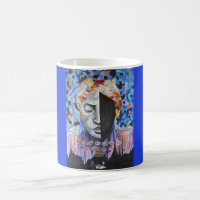
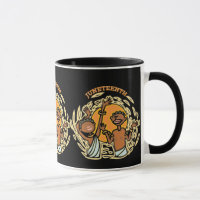
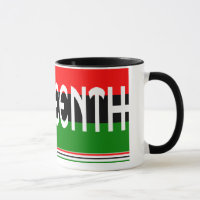
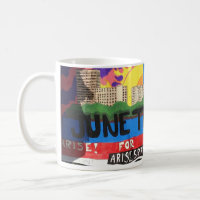
Collection of Juneteenth Drinking Mugs to celebrate American history, the beginning of the Juneteenth Day Celebration and to help keep you warm during the winter months by warming your hand when this mug is filled with your favorite hot drink. Several different artist Juneteenth designs are featured here below. A nice addition to your kitchen, or a nice gift for that special someone. Celebrate the history connected to the Juneteenth Day Celebration all year long and learn more about Emancipation. Visit the Juneteenth Handbook Pinterest board.


>

Powered by Zazzle Affiliate Helper