Friday, May 31, 2019
2019 Juneteenth Day Celebration
Back in 1863 when Abraham Lincoln wrote his Emancipation Proclamation that contained the words "I do order and declare that all persons held as slaves within said designated states, and parts of states, are, and henceforth shall be free" he intended the news within his proclamation to be heard by all of the slaves in the southern U.S. Southern slave owners, slave merchants, and newspapers did not share that good news with the slaves.
Word still managed to reach some of the slaves in the south, but the unbelievable message was treated more as hearsay and rumor, until June 19, 1865, when General Gordon Granger assumed jurisdiction over the state of Texas and in his reading of General Order #3 confirmed to the large slave population gathered there in Galveston Texas that the hearsay and rumor of freedom whispered amongst the southern slaves about Abraham Lincoln's words of freedom were true bringing to an end two-and-a-half-years cruel doubt and secret rumor.
The joy and jubilation experienced that day by our African and African American slave ancestors would mark the first celebration of Juneteenth. Juneteenth Day Celebration is now celebrated thought out the U.S. and in many places on the date of June 19th. One of those places, out here in California, will be the former black township of Allensworth California founded in 1908. The all-black town started by Colonel Allen Allensworth no longer exists as it once did in the early 1900s. The township has been turned into a State Park operated nowadays The Friends of Allensworth Association and the California Parks and Recreation Department.
Allensworth is a neat slice of African American history in my opinion that mixes well with the Juneteenth Day Celebration. Not only because of the town's place in African American History but because of its State Park status and ability to host a lot of people. I think that makes the historic town of Allensworth a great way to answer the question of how to celebrate Juneteenth. The town and the towns creator, Colonel Allen Allensworth are both significant representations of African American history. Juneteenth to me is about family and celebrating the freedoms our African, and African American ancestors did not live long enough to enjoy. The Juneteenth Day Celebration is also a great teachable moment in the lives of our children and a chance for you to share your Juneteenth knowledge with anyone you run into that is looking for more information about the Juneteenth celebration, or the Juneteenth flag.
I have often tried to imagine what it would be like to invite one of my slave ancestors from the distant past here to the present day and time where we all live today to see what they might say and think the progress African American people have made since the end of slavery? Would they be surprised to see that the KKK is still alive and well, and still working in government? Would they be able to comprehend that our last president was a black man with a white mother? Would their minds be totally blown by my flat-screen-television; or the fact that people on the TV-screen were talking about paying millions of dollars for both black and white sports figures?
These are not the kind of thoughts that keep me up at night but they do sometimes come in handy when I'm working on a screenplay. I realize that it would be a disaster for me to try and explain all of the above to a slave ancestor, our lifetimes would just be too far apart. When I celebrate Juneteenth I am always mindful of the sacrifices the Africans who came to America against their will centuries before I was born, and for the ones that I know did not complete the middle passage. My hope is that their spirit has long since been freed to return to the motherland. I also celebrate for all of the African Americans, like me, who were born here, in America, and who have never known the motherland of my ancestors first hand.
Those ancestors were the reason I titled my documentary A Time to be Remembered, a Juneteenth Story in the hope that neither the enslaved nor the history that surrounded them will ever be forgotten. Because a history that is forgotten is doom to be repeated, I remember reading someplace, and because slave families were often sold apart from each other during the days of slavery making the celebration of "family" a part of the Juneteenth Celebration just makes sense to me.
Also, while Juneteenth is thought of as a celebrated for black people and the end of slavery it should also be remembered that there were plenty of non-black people who had good reason to celebrate the end of slavery in the U.S. too. The majority of people who ran and maintained the clandestine system of secret trails, safe-houses, and hideouts that made up the underground railroad were white, Indian and other non-black nationalities. I believe that their contributions in the battle to end slavery in America should not be forgotten in, the end of slavery celebration we call Juneteenth.
Labels:
Juneteenth Experience
The All that Zazz Blog shares information, tips, and insights on superheroes and other greeting cards for office or home parties and celebrations that are provided by my affiliate Zazzle.
Friday, April 19, 2019
Juneteenth Greeting Cards
Powered by Zazzle Affiliate Helper
Labels:
Juneteenth History
The All that Zazz Blog shares information, tips, and insights on superheroes and other greeting cards for office or home parties and celebrations that are provided by my affiliate Zazzle.
Sunday, April 14, 2019
New Juneteenth Handbook Facebook Group
Back when I worked at Stanford University at SLAC (the Stanford Linear Acceleration Center) I was part of an organization that set up the Juneteenth Day Celebration each year. Of my over 35 plus years at SLAC, there was a time when I first became aware of the Juneteenth Day Celebration and that resulted in my participating in the celebration the last 10 years of my employment SLAC. There were bands, T-Shirts, good food, friendly people and almost always someone there who was learning about the Juneteenth Day Celebration for the first time the way I did 10 years earlier.
The job I had at the television station where I first heard all the details behind Juneteenth, didn't celebrate Juneteenth. The thing that stuck with me when I did first become aware of what the word Juneteenth meant was that Juneteenth is "the Oldest African American Celebration in the United States." I remember thinking how could I not know about the oldest "African American" celebration around? History was one of my favorite subjects when I was in school so I found it highly unlikely that I had read over that important fact and not filed it away in my memory bank.
In the end, and after a little research, on my part, it turned out to be a relief realizing that I had not read past an important black history fact. The oldest African American Celebration in this country (the U.S.) truly had never appeared in any of the history textbooks I had studied in. Like I tell most of my friends my knowledge is history especially as it relates to slavery came from the years BC (before cable). The Internet is a great source of information nowadays but since not all the information I have come across that relates to Juneteenth and slavery has been reliable it helps to have more than one source of information about a Juneteenth/slavery question.
If you have anything you would like to share about the Juneteenth Day celebration, like how that day is celebrated where you are, or how you first became aware of the Juneteenth Day celebration please feel free to share that information to this new Facebook Group.
Labels:
Juneteenth Experience
The All that Zazz Blog shares information, tips, and insights on superheroes and other greeting cards for office or home parties and celebrations that are provided by my affiliate Zazzle.
Tuesday, February 19, 2019
The African Religion
In West Africa, where most of the slaves involved in the Atlantic Slave Trade came from, the religion of Vodun was practiced by at least 30 million people in Ghana, Togo, and Benin. Vodun, with its, numerous deities, spirit possessions, and animal sacrifices is one of the African religions that has, in my opinion, become the most misunderstood religions on this planet. In the eyes of people who bought and sold slaves the concept of paganism was used to justify the enslavement of African people and to separate them from their original religion.
In the Americas, the African religion of Vodun was renamed Voodoo and scorned by the none Vodun believers, made up of European and colonial slave owners and colonial slave merchants. The slave owners sought to do away with the ritual and tradition associated with the African religion and to perform a Christian conversion of their growing population of enslaved African people to the more refined and documented religion of Christianity. Over the years many slaves did let go of their religious umbilical connection to the motherland of Africa and grew apart from their religion that emphasized a more harmonious balance between the spiritual world and nature.
For a time many of the newly converted Africans still found ways to incorporate some of their African rituals into their Christian beliefs and in the South American places where they were left to practice their brand of Christian mixed with African religious way some of their African religious roots can still be found today. In North America, just about all of the African religious roots have disappeared, by separating the African American slaves from their cosmologies, rituals, and rites that they still clung to. Gone were their cultural expression, in song, dance, stories, and knowledge of the healing arts. As a result, Vodun turned Voodoo, continued to be demonized by the promoters of Christianity who viewed Voodoo as mere superstitions, that without a written text, was considered worthy only of being labeled heathen, and looked upon by the Christians as idolatry.
In fact, s variety of polytheistic religions had existed on the African continent for example, for centuries the African continent had fallen under Islamic influence so, in fact, not all African religions were without documentation (or written text) and not all the Africans shipped to the Americas were unable to read. The majority of African slaves may not have been able to read English, but many could read Arabic. Sprinkled throughout the colonies were small groups of practicing Muslim Africans that had a tendency to be pointed out by the slave merchants as exceptional slave labor groups. During the early part of the nineteenth century, a larger number of Islamic slaves would end up in northeast Brazil than all of the colonies and it would be the Muslim slave's that would provide a greater source of trouble and discontentment for their owners.
Portuguese missionaries had actually introduced European Christianity in places on the African West Coast in the fifteenth century making some slaves familiar with Christianity even before they were robbed of their freedom. The Old Testament spoke of the condition of the enslaved and nurtured within those slaves listening to the words of the bible the belief in future equality and freedom. Many of the slaves converting to Christianity would come to visualization Christianity as a possible way to freedom, and as more of the slave population converted to Christianity slaveholders came to the realization that one day the Christianization of the slaves might lead to a demand of emancipation
In a way, the slave owners were right freedom was a word those who owned slaves didn't want to hear when it came to their slaves but eventually members of the churches, Quakers, Abolitionist, and American Indians would begin assisting slaves who would choose to emancipate themselves. Word had reached many slaves in the colonies that in Florida the Spanish held out the promise of freedom as a reward to any slave willing to undergo conversion to Christianity; which prompted the 1667 law passed in Virginia that stated conversion to Christianity did not change the status of a person from slave to free. As evangelicals and preachers drew more and more Africans born in America into the chapels and churches in North America their Christian conversion would just about do away with the religion brought to North America by the enslaved Africans. Through it all, some African descendant with the desire to hold on to the old African beliefs changed and adapted to their worship to their new circumstance.
That's why in places where the African descendants were given their own social space remnants of the old African religion can still be found in distinctive local forms like Santeria in Cuba, Voodoo in Haiti
Labels:
Juneteenth History,
religion
The All that Zazz Blog shares information, tips, and insights on superheroes and other greeting cards for office or home parties and celebrations that are provided by my affiliate Zazzle.
Monday, January 14, 2019
Honoring the African Ancestors
Back when the author Alex Haley documented the journey of his family roots, from Africa to a slave ship, to the Americas and the slave auction block. The unfolding of that information led him on a journey of adventure that he would eventually transform into his book titled Roots. With the help of Ancestors-dot-com, I was driven to learn more about my own family's African-American roots. I have to admit that my journey in search of my family's roots has been bewilderingly exciting. I have learned that you will need some C.S.I., investigative skills because you will have to overcome some of the family stories you have grown up with in order to embrace some of the cold hard facts that have a tendency to appear before you in the US census reports from long ago. A good example of this is while exploring my mother's side of the family things seemed pretty straightforward. There was an ancestor by the name of Celie, just like the character name in the movie Color Purple (I kid you NOT) who was a slave. She was given to the slave owner's daughter as a wedding present and from Celie, I was able to track solid family connections from 1855 to the present time.
My father's side of the family needed all of my detective skills which were very close to zero. But persistence and a lot of luck paid off. My father's side of the family just seemed to pop into existence with no prior history that was until I finally ran across a census report where I found all of my father's family names as they appeared on a later census only on this census the entire family was listed as white. Tracing that family line back from the time my father's family first appeared in my research filled in all the blanks. My search was based on all the information I had collected from older family members, many of them now deceased never revealed anything about a mixed family. I realized that I was looking at something about our family that none of us knew. It appeared that my grandfather was Caucasian, and for as long as he was alive the family was listed in the census as white. After he passed away the same family unit (with everyone a little older) was changed from white to colored at the point my father's family first appeared on my radar. All of my Ancestor' dot com drama is why I appreciate what Alex Haley was able to do. I put a pin in it and moved on with my research.
I remember looking at a map of Africa and thinking what a monumental task it must have been to backtrack hundreds of years in search of a family line beginning. Alex Haley went on to transform his Book Roots into a television special that kept people (like a younger me) glued to their television screen every night the televised drama, Roots, was shown. Almost every A-List actor in Hollywood, black and white, wanted to be part of that history-making television production. Aside from showing the horrors of slavery; the mood of this nation toward slavery in the 1800s and the plight of African people born in America at that time, the overall story of Alex Haley's Roots displayed a strong emphasis on family, along with the drive and desire not to forget where you had come from, or all those that had come before you.
To the lead character, Kunta Kinte, Africa was his home, and while he never got the chance to return to his home the African country and its region would not be an alien place to Kunta Kinte had he found a way to get back home. He understood the language, culture, and landscapes. Fast forward a few hundred years and African Americans born on this continent were forced to give up their language, their culture, and their religion are familiar with a new language, (English) a new culture, and a new religion (Christianity). When I was in college (back in the black power 1960s) I remember several of my activist friends talking about going back to Africa, even though they were born in the U.S., for at least two of them that experience led to disappointment, the couple one man, one woman that made it to Africa were not there for a year before their desire to return to America soon outweighed their desire to live in Africa.
One of the major effects of Alex Haley's book Roots was a giant surge in ancestor research by thousands of people from every nationality and most likely the cause of the growth of places like Ancestors dot com. The African people who came to the Americas as slaves were transformed from African culture to their new way of living over hundreds of years. Today just about the only trait African Americans have that relates to Africa is our skin color which is one of the reasons I tell the story of William and Rosa Bella Burke in my Juneteenth Handbook. The Burke's reminded me so much of my college friends determined to return to a motherland they had only read about or seen on television or in motion pictures.
Their experience was much like that of William and his wife Rosa Bella, two slaves who were set free by their master Robert E. Lee prior to the Civil War. They were African Americans separated from Africa by generations but when offered the chance to go to Africa, at the expense of their former master Robert E. Lee, they said yes. Assisted by the American Colonization Society (A.C.S.) the Burkes moved their entire immediate family from the U.S. to Africa because, as Rosabella put it, she wanted her children to grow up free. Upon arriving in the tiny coastal colony on the west coast of Africa, started by the A.C.S., would later grow into the Nation of Liberia. The Burke family settled into the African way of life and were immediately introduced to some of the harsh differences that went along with relocating to a new land.
Like my college friends, neither William nor Rosabella spoke the African Language, and few of the Africans that worked with the A.C.S. spoke a little English but this didn't help the built-in animosity between Africans and the newly arrived African American beginning to arrive into the tiny colony promoted by the A.C.S. William began taking some of the African people into his home, and sharing what little he had with them. He began teaching English to the African people he reached out to and with Rosabella, they worked to feed, clothe, and teach the African people around them. As time passed William started a church and it was during those troubled times that Rosabella continued to communicate with Mary Curtis Lee, the wife of Robert E. Lee. Many of their correspondence would be published in the 1859 edition of the American Repository. The women shared news of what was happening in their respective countries, Mary Curtis Lee told Rosabella of the growing talk of a war between the states.
Rosabella sent messages that told of the struggle involved in her family's slow and sometimes painful assimilation into African culture, she shared news of the people, places, and things she and things that she and her family had to deal with on a daily basis. Rosabella asked Mary Curtis Lee to pass messages on to her and William's family members still living in the area. Even though William and Rosabella Burke had little in common with the people in their new surroundings except for the color of their skin, unlike my college buddies, they would eventually make the transition to living outside of the U.S. In one of the messages from Rosabella, Mary C. Lee learned that Rosa Bella was expecting her first child born in Africa, and Rosabella was given the news that there was a war going on between the states.
"I love Africa," Rosabella wrote in one of her letters to Mary, "and I would not change it for America," she added.
The Burkes would eventually make Africa their home and because of her friend in America, Mary Curtis Lee, she and her husband William would be kept up-to-date about the war going on between the states an entire ocean away. Rosabella Burke would give birth to her first baby born free in Africa, a baby girl that she would name after her friend and former slave owner in America, Mary Curtis Burke.
I have come to love the study of history, in particular, black history. I have found learning about America's past with regard to slavery, the trade triangle, and people removed from Africa to be worthwhile history. In a way, it was following the slavery history trail that eventually steered me to the history behind the creation of the Juneteenth Day Celebration.
In fact, I had gone to visit my mother who was from Texas to get information about her feelings about the Juneteenth Day Celebration and to see what she remembered of the celebration from when she was younger? But when I found her sitting in solitude at my brother's house in Oakland CA. the subject changed. I learned from her that her most recent stroke had taken away her ability to write and that she was feeling down because when she could have taken the time to sit down and put her story into words life had often gotten in her way. I was able to lift her spirits by volunteering to write her book for her, which is another reason I spent so much time on Ancestors dot com.
After interviewing her for as much detail as she could recall, I wrote her book for her, over that summer I wrote, giving my mom the writer's credit, and by the New Year, her book Faye was published. I had a rubber stamp of her signature made so that she could sign her book for family members. Before she passed away a few years later she told me, the real reason she wanted to get the book done. One of her grandchildren (probably mine I'll bet) was having a conversation with her about the library, and in her attempt to explain to her grandchild's inquisitive little brain, she made the comment that you could find anything in the library. To which the child responded that he was going to check out the book about our family so that he could read all about the family members that came before him. In the end, I never did get to have that deep Juneteenth Day Celebration conversation with Miss Eunie Mae about growing up in Texas and Juneteenth.
Luckily for me today the Internet is a great place to look for facts especially where they relate to the trans-Atlantic slave trade up to and including Juneteenth. What you do with those facts is up to you. Use them to track down Ancestor dot com leads on your family root connection to Africa, or do what I did and turn some of your research findings into an educational presentation about slavery.
The thing that is foremost in my thoughts when I think about celebrating Juneteenth is that just like the Hebrews who came to celebrate their deliverance from slavery with the Passover celebration. Liberated slaves here in America celebrated their freedom from slavery with the Juneteenth Day Celebration. I celebrate Juneteenth Day in honor of all those who did not live long enough to know the freedom that they prayed and fought for.
Labels:
Juneteenth History
The All that Zazz Blog shares information, tips, and insights on superheroes and other greeting cards for office or home parties and celebrations that are provided by my affiliate Zazzle.
Sunday, November 18, 2018
Juneteenth Drinking Mugs
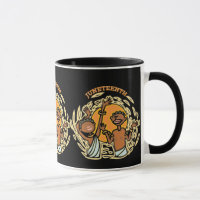
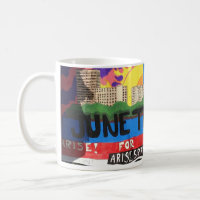
Collection of Juneteenth Drinking Mugs to celebrate American history, the beginning of the Juneteenth Day Celebration and to help keep you warm during the winter months by warming your hand when this mug is filled with your favorite hot drink. Several different artist Juneteenth designs are featured here below. A nice addition to your kitchen, or a nice gift for that special someone. Celebrate the history connected to the Juneteenth Day Celebration all year long and learn more about Emancipation. Visit the Juneteenth Handbook Pinterest board.
>
Powered by Zazzle Affiliate Helper
Labels:
Drinking Mugs,
emancipation,
juneteenth
The All that Zazz Blog shares information, tips, and insights on superheroes and other greeting cards for office or home parties and celebrations that are provided by my affiliate Zazzle.
Wednesday, November 14, 2018
Abolitionist Study 5
This is the 5th and final post in my Abolitionist Study Post about the interactions between Frederick Douglass and Abraham Lincoln during the build-up and the actual prosecution of the war within this nation. The Civil War continued from one bloody battlefield to the next and along the way, Lincoln would learn that the British did not plan to join Confederate forces in the War Between the States. America was the only colony turned union capable of supplying England with its source of cotton. I can imagine that Great Britain was in the same state of limbo put so many American politicians on the fence, unclear just who would be victorious in the Civil War but willing to wait until the war was over before making any commitment.
If cotton wasn't a good enough reason for the English to join up with the rebels perhaps the reason for the British superpower not wanting to commit troops and resources preserve slavery was because Britain had already outlawed slavery, in fact, the British Navy was an active participant in the blockade set up along the African coast to prevent new slaves from being taken out of Africa. The effect of the blockade made new slave transport riskier and thus more costly. American ship captains experienced at evading the blockade incurred the risk and asked for more money from the slave merchants intent on ignoring the no new slaves law.
Fredrick Douglass felt that the battle going on between the states would lead, either to this nation's salvation, or its ruin. During the Civil War, most of the union of states was located east of the Mississippi River. Explorers were beginning to map out territories in what was, back then, the uncharted lands to the west, and slavery would have to grow to keep up. The disunion between the states that would eventually elevate itself to the ultimate conflict of open war had actually played itself out earlier when Kansas was set upon by pro-slavery southerners determined to make the new state a slave state, and northern anti-slavery factions determined to see Kansas become a free state.
My Abolitionist Study Post constitutes mostly my thoughts and feelings from my reading of the book Douglass and Lincoln, by Paul Kendrick and Stephen Kendrick. Back in the 90's when I worked as a writer on the Juneteenth Documentary A Time to be Remembered, a Juneteenth Story, distributed by Karol Media. Most of the information I came across spoke of Abraham Lincoln and Fredrick Douglass with regard to the Emancipation Proclamation and since that time I have been interested in understanding the true relationship between Fredrick Douglass and Abraham Lincoln
.
The book Douglass and Lincoln filled in a lot of the blanks for me with regard to the true relationship between these two men. Lincoln's plans for what was to come for the slaves, after the Civil War was not realized, mainly because his vice president, Andrew Johnson did not see the post-Civil War years the way Lincoln had visualized. Fredrick Douglass and a few others who would accompany him to the White House to meet with the new vice-president-turned-president would find out that President Johnson's post-war visualization for the ex-slaves would be tempered by the new commander and chief worries about preventing a race war, a bitter-sweet climax to the Civil War for Fredrick Douglass and his abolitionist supporters.
I did learn the over the years Frederick Douglass had visited the White House more than a few times, and that while many of his meeting with President Lincoln was contentious they were most often productive, and for the most part pleasant. Kind of like two people attracted by the same idea, but with two completely different ideas on how to get the job done. Douglass was treated to none of those comforting thoughts or feeling after his meeting with the new President of the United States.
I ended up being almost as surprised as Frederick Douglass
was when Abraham Lincoln widow Mary included Frederick Douglass on her list of people that she would send mementos of her husband to. She sent her husband’s walking staff to Frederick Douglass along with a note explaining how Abraham Lincoln had considered Douglass someone important to him. Frederick Douglass wrote her back telling Mary Lincoln that he would treasure her gift to him till the day he died.
With Abraham Lincoln gone President Andrew Johnson, the almost total opposite to Abraham Lincoln with regard to the Post-Civil-War, ex-slave problem would be left to start the reconstruction of the Union. Douglass and his supporters would fight hard to turn Abraham Lincoln's Emancipation Proclamation
into the Thirteenth Amendment to the Constitution of the United States and make slavery illegal in this country.
While many white people had fought to end slavery many were still not ready to have the slaves-turned ex-slaves as neighbors and for a long time would support the so-called black codes designed to separate the races. Frederick Douglass would live into his seventies and die a free man in a country still healing itself.
Labels:
abolitionist
The All that Zazz Blog shares information, tips, and insights on superheroes and other greeting cards for office or home parties and celebrations that are provided by my affiliate Zazzle.
Subscribe to:
Posts (Atom)


June - JuneTeenth Card
Juneteenth Card
Happy Juneteenth Holiday Card
Juneteenth
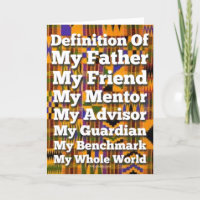
My Father Is My Role Model All Season Card
Good Fences Make Good Neighbors Note Card


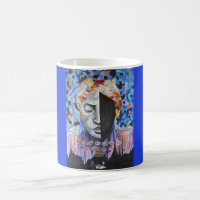
Harriet Tubman Collage Mug
Juneteenth Mug
Juneteenth Mug

Springfield Juneteenth Mug
Juneteenth Mug
Juneteenth Stars Coffee Mugs
Juneteenth Stars Specialty Mugs
Juneteenth Stars Lovers Mugs
Juneteenth/Liberation Coffee Mugs
Juneteenth/Liberation Lovers Mugs
Juneteenth/Liberation Specialty Mugs

Juneteenth Freedom Day African American Coffee Mug

Black History Emancipation Freedom Juneteenth Mug

Juneteenth Party 1865 Coffee Mug African American

Juneteenth Freedom Day Coffee Mug June 19th

Party Like Its 1865 Happy Juneteenth Coffee Mug
Juneteenth/Liberation Soup Mug
BLACK RAINBOW mug
Juneteenth Freedom Coffee Mug
Juneteenth Freedom Black History Flag Coffee Mug

Party Like Its 1865 Happy Juneteenth Coffee Mug
Juneteenth Stars Soup Mug